
First Published July 3, 2015
Benjamin Schifferdecker asks:
Fuzzy Wuzzy was a bear but Fuzzy Wuzzy had no hair. So Fuzzy Wuzzy wasn’t fuzzy was he?
Dear Benjerwuzzy Fuzzydecker,
Like you, I once perceived this amusing saying as nothing more than a jumble of nonsense words strung together and recited solely to make me giggle. It worked when I was five and it still works today. I admit, I spend a lot my time giggling. I see no reason as to why I shouldn’t. In fact I have serious misgivings about anyone who can’t or doesn’t. Nevertheless, for those rare moments when I am feeling down, my mother will always call and orate the sad story of the misnamed bear with his chronic follicle problem and finish with that superfluous question the answer to which relieves all life’s quandaries. Of course he wasn’t fuzzy. He had no hair. That’s hilarious. Bald people! Ha!
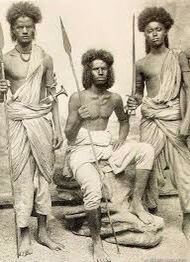
Like so many things we learn by rote and do not question such as most nursery rhymes, the alphabet, and how to beat Super Mario Bros. with our eyes closed, this cute little tongue twister is steeped in violent history. Despite this poem’s obvious attempt at quaint humor, it is based on a particular event in history, the Mahdist War, obviously. Why wouldn’t that be your first guess? Fought between the Mahdist Sudanese, the Khedivate of Egypt, and later the forces of Britain from 1881 to 1899, the war resulted in the joint-rule state of the Anglo-Egyptian Sudan lasting from 1899 to 1956. I bet you’re glad you know that. Now when someone asks you how many Mahdist Sudanese people it takes to change a light bulb, you’ll know the answer you racist jerk! Incidentally, British soldiers thought the Fuzzy-Wuzzy rhyme was a hoot and it had them rolling in the trenches for hours, not because they were laughing but rather because they were dead. More on that later.
As we have learned from Angela Stark’s question regarding Yankee Doodle and his macaroni hat, the British are big on making up mocking songs about their enemy. Historians and laypeople are somewhat at odds in regards to the details of this rhyme and its meanings but they do agree on some points, particularly the fact that they don’t like each other. A poem was recorded by Rudyard (The Hip Kipster) Kipling who spent considerable time on Earth and wrote books about jungles, jungle books you might call them. Kipling’s poetic account praises the Hadendoa, (a nomadic subdivision of the Beja people, known for providing refreshments, concessions, and fierce warriors to the Mahdist Rebellion) and refers to several events pertaining to the 19th century Sudanese conflicts including, battles, fights, skirmishes, and, I’m assuming, an occasional whoopee cushion. What’s a war if you can’t pull a prank or two? Ask any U.S. Marine.
The term Fuzzy-Wuzzy was used by the British soldiers in reference to the Hadendoa, who were recognizable by their large tufts of awesomely styled hair. Possibly the inspiration for punk rock hairstyles, it is noted that this sub-tribe used butter like we use styling gel. I am fairly certain this was not the kind of butter you get from the dairy section and rub on your nipples, so settle down you weirdo. There are other kinds of butter. (By the way, Coco Butter, great for nipples!)
Unlike the Yankee Doodle song, the Fuzzy-Wuzzy rhyme was possibly created out of slight admiration of the Hadendoa, but not much. As the story goes, the Hadendoa gave the British soldiers a bit of unexpected trouble at first, hence the line “Fuzzy-Wuzzy was a bear.” This is just my opinion but the British might have initially fared better if they weren’t so busy making up nursery rhymes. That’s valuable time they could have spent engaging their whoopee cushions. The next line in the rhyme possibly refers to the fact that, despite the unexpected ferocity of the Hadendoa, they were eventually defeated approximately around the same time the British managed to reload their guns. And finally, the question at the end no longer makes me giggle. Hooray for knowledge! Knowledge: Putting a Stop to Giggles Since Year 0001.
In addition to all the aforementioned morsels of mind-bogglingly interesting trivia useful to virtually no one, this rhyme and the situations to which it refers has been used as an example to demonstrate part of a mathematical formula, developed by Frederick Lanchester, used for calculating the relative strengths of a predator/prey pair. And just when you were starting to nod off! The Fuzzy Wuzzy Fallacy, more prominently known as Frederick Lanchester’s Square Law, states that the power of a military force is proportional to the square of the number of units. I am assuming “units” in this case refers to soldiers because it would make no sense from a militaristic standpoint if “units” were pineapples or some other kind of fruit. Personally, I fell asleep reading just one line of this mathematical military theory which I am certain was an intentional tactical decision of Lanchester himself, who I later found rummaging through my underwear drawer.
After all this research my conclusion is this: Rewrite the song so it may combat our misconceptions about it, relieve us of our ignorance, and finally, once again, make us giggle like five year old girls. Here goes:
Fuzzy-Wuzzy was not a bear.
And, incidentally, they had lots of hair.
They were a nomadic tribe called Hadendoa.
And they surprised the British during the Mahdist Rebellion.
Now shut up and go to sleep.
-Professor Popinjay
 Professor Popinjay's Compendium of Perspicacity
Leave a comment