

The A Non-Review by Professor Popinjay
Showa, meaning “shining/bright peace” refers specifically to the reign of Emperor Hirohito from 1926 to 1989. One of many areas of significance during this period is rapid economic growth for Japan and the emergence of Showa Modan, a blending of Japanese and Western styles in all forms of art.
The Showa Era for Godzilla would last from 1954 to 1975 and we would see him evolve from a destructive force into something seemingly unlikely.
The 1955 sequel to the original Godzilla film, titled “Godzilla Raids Again” would pioneer a new idea. We’d see a new monster named Anguirus emerge and attempt to destroy Japan, but Godzilla would have something to say about it. Thus we have our kaiju film trope of two monsters punching it out and destroying the city in the process.
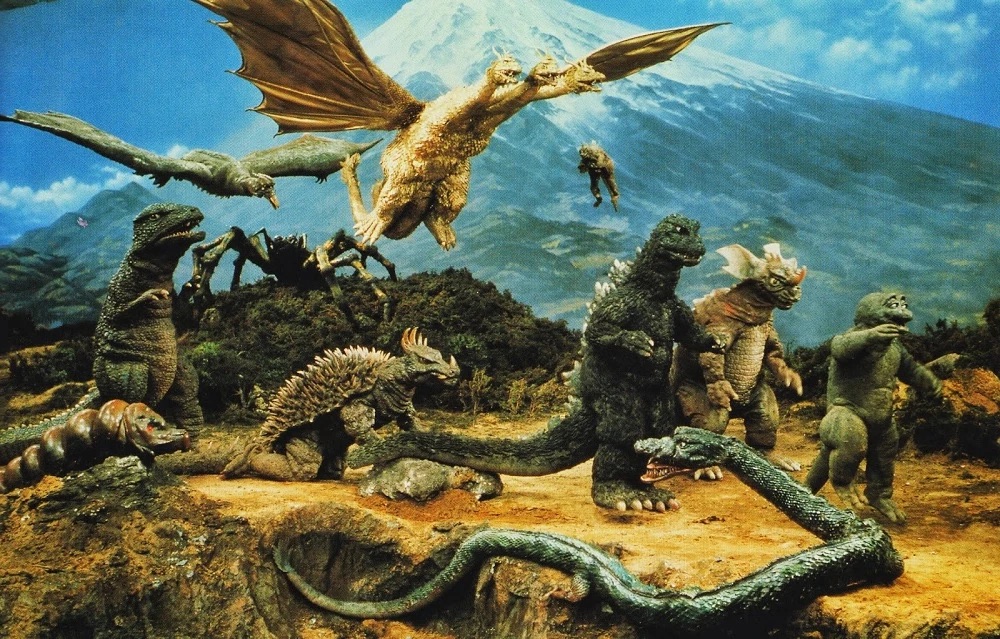
All of a sudden giant monsters were coming out of the woodwork to fight Godzilla, who was rapidly becoming the heroic protector of Japan. Was he still representing the atomic bomb? Well, the war was over, the atomic age had begun, and the peaceful applications of atomic energy had been realized. Maybe Godzilla would come to represent a more peaceful time. Maybe his wrath had subsided.
Godzilla Raids Again is a very different film from the first. It’s often happy and light-hearted. It’s a fun film!

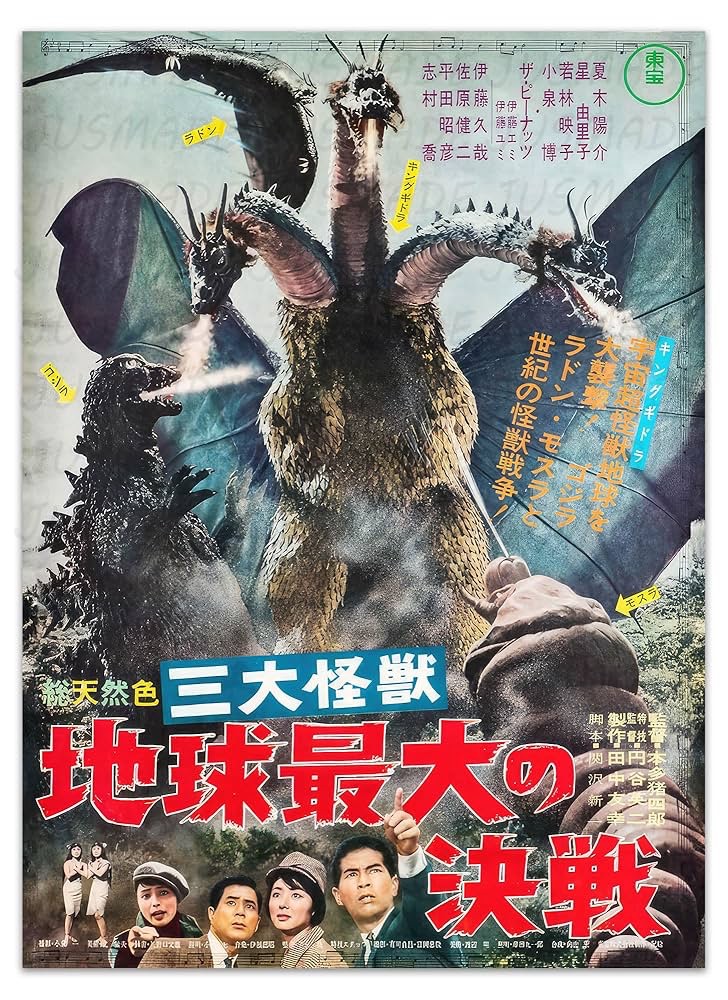
During this period we would also see the origin of monsters like Rodan, Mothra, (both of whom starred in their own stand-alone film) and King Ghidorah the three-headed dragon. These would become very memorable characters and main staples in the Godzilla franchise.
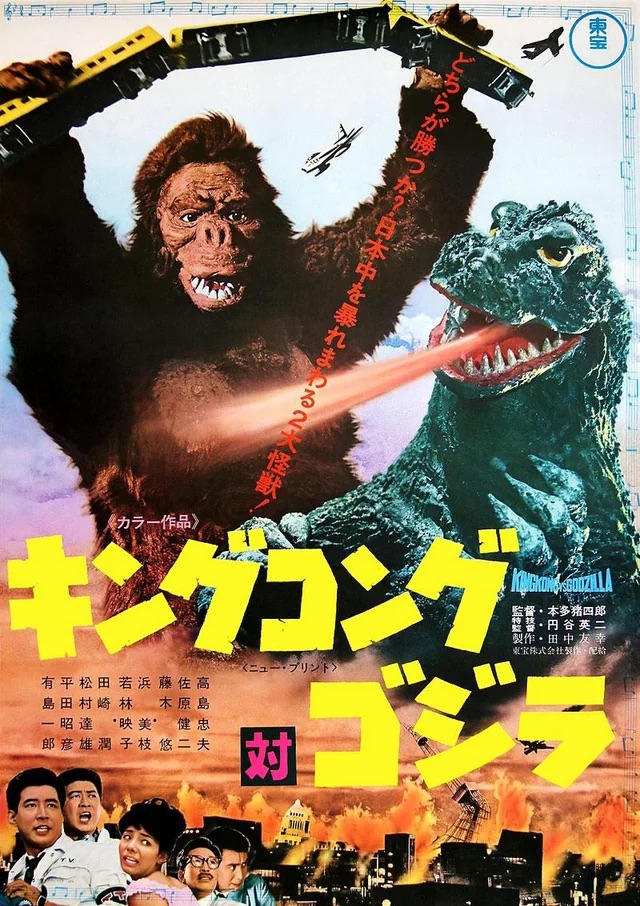
Meanwhile some legal disputes were ensuing in the United States regarding ownership of King Kong. Eventually Toho studios would get permission to film the bout of the two titans. King Kong vs. Godzilla would premiere in 1962. This would be the first time Kong would appear on screen in 29 years and, forgive the pun, but he got big again! We’d see The King Kong Show (1966), King Kong Escapes (1967) and King Kong (1976). Kong was no longer merely an inspiration for Godzilla, now he was intrinsically and canonically connected.
In Fact we see a great deal of western influence on the Godzilla films of this period, exemplifying the Showa Modan. The popularity of James Bond films lead a few to incorporate a bit of spy action. Some actresses even had the honor of being in both a Godzilla film and a Bond film. Ghidorah, The Three-Headed Monster (1964) would replicate the ending from the film Roman Holiday (1953).
It was eventually realized that Godzilla’s biggest and most enthusiastic audience at this time were children who would sit bored through the A film just to get to the B film at a double feature. Japanese kids both loved their heroic protector and to see miniatures get destroyed. To Tomoyuki Tanaka this advent probably seemed a strange disconnect from the harsh realities of war only 20 years prior. But this was a new generation free of wartime ravages. Director Jun Fukuda would make a Godzilla film that would cater to this new audience in Son of Godzilla (1967).

This trend would continue into other films and would culminate into Godzilla doing an infamous victory dance (seen above) after a battle which left die-hard adult fans scratching their heads and wondering just how silly Godzilla was going to get.
Incidentally, these would be the films that would become widely circulated in the United States and sadly, most Americans would come to regard Godzilla films as synonymous with corny, cheesy, and poorly executed effects. Anyone who unabashedly chose to love Godzilla films at that time in the U.S. would often be regarded as an easy-to-entertain nerd.
Back in Japan, Toho Studios was losing money and recycling old footage into “new” films which did not go unnoticed by audiences.
A year would pass with no Godzilla films coming out. Finally in 1971, Yoshimitsu Bano, would direct a call back to adult-focused entertainment with Godzilla vs. Hedorah. This time the now benevolent monster of the atomic age would defend Japan against a new growing world concern: pollution.
 Professor Popinjay's Compendium of Perspicacity
Leave a comment