
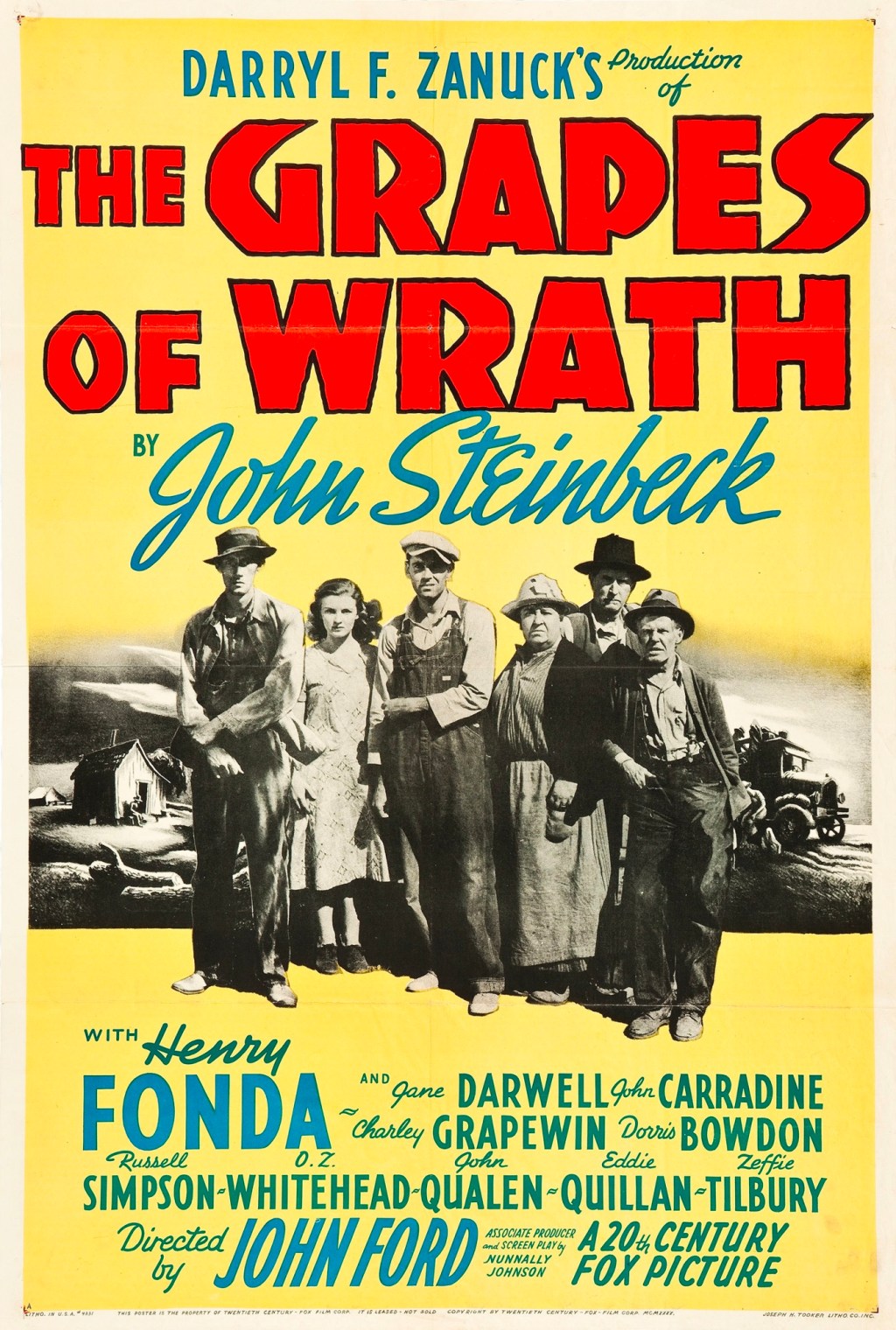
A Non-Review by Professor Popinjay
I’ve seen some depressing films in my lifetime. This was not one of them; a surprising fact considering people are dying off faster than Game of Thrones Characters in this.
I can’t say as I liked this film per sé. A film where everyone is trying to eke out a meager living during the Great Depression after being kicked off their land, replaced by machines… it’s a sad state of affairs, the Great Depression was. No bones about it. Might even be why they (gnomes) called it that.
Gran Pap kicks the bucket in almost the first scene. Sorry, spoilers. Then Gram Gram gets it. By the end of act one half the cast are gonners. What is this, Willy Wonka and the Chocolate Factory? All they’re trying to do is get to Californy so they can get some work being paid 15 cents a day to feed the chillins!
I liked the scene where the chillins (children [young humans]) had their first experience with a flushing toilet. They thought they had broken it by flushing and so ran away scared.
If this was an accurate depiction of life in work camps during the Depression it seems just awful. Even if you ARE Henry Fonda.
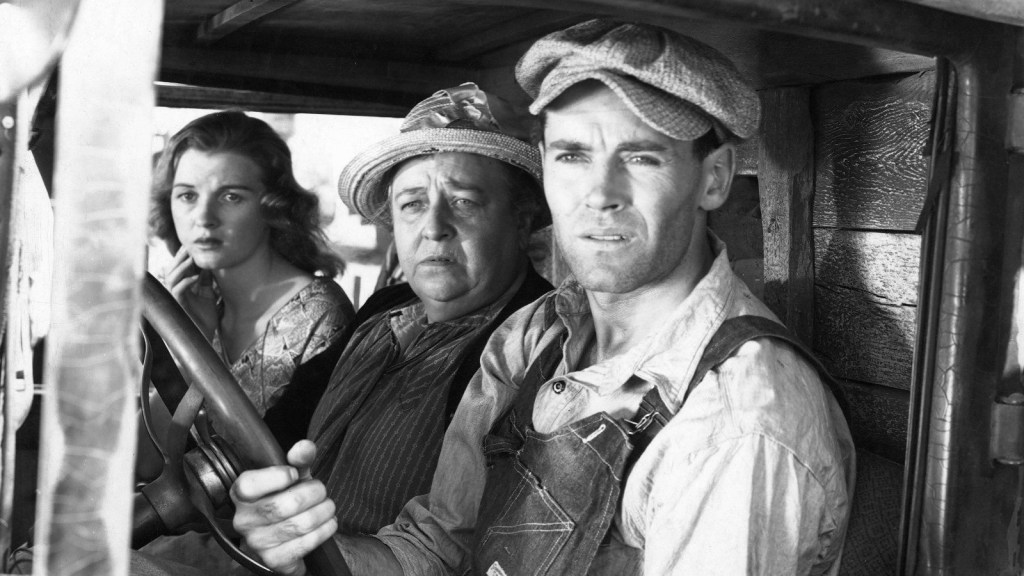
It was good feels when jerks were planning on busting up a social and good people got wind of the plan and thwarted them without the party-goers even noticing. Was that this film or was that “3 Ninjas Knuckle Up”? Oh, it happens in both films.
I also found it an interesting perspective from the two clean-cut gas station attendants who were clueless as to how people could live like our downtrodden protagonists and concluded they just don’t know any better. Such a narrow-minded view to assume the poor and oppressed don’t know they’re poor and oppressed.
While I wouldn’t classify this as entertainment, it was educational and despite the many sad events throughout, it came out hopeful. I can understand why this is one of those classics we are forced to read in school. I’ll say I liked it better than another Steinbeck novel, Of Mice and Men. Good Lord, that one was truly depressing.
The book takes its title from “The Battle Hymn of the Republic” by Julia Ward Howe, which refers to a passage from the biblical book of Revelation, symbolizing God’s wrath against those who oppress the poor. Steinbeck, recognizing the political undertones of his novel, used the title (at his wife’s suggestion) in the hope of avoiding accusations of radicalism. I must say the grapes to wrath ratio is surprisingly unbalanced considering this film’s title. There was an overabundance of wrath in this film, and a shocking complete lack of grapes.
I think this is an important story though. It was back in 1939 and I think it’s relevant again in the present. If thinking and writing that statement makes me radical, then give me my skateboard, backwards ball-cap, and sunglasses because I’m totally radical.
 Professor Popinjay's Compendium of Perspicacity
Leave a comment