

A Non-Review by Professor Popinjay
(1995)
I found this film strange, even when I watched it as a kid. I’d like to describe this as an “old west fables” version of The League of Extraordinary Gentlemen. That would have been a much cooler idea in my opinion. While it combined a bunch of American fables like Pecos Bill, John Henry, a comparatively small Paul Bunyan, (and probably some others I’m forgetting), they didn’t really have much to do beyond inhibiting technological progress and innovation.

I think the film is trying to show the real people behind the legends, which makes them all a little lackluster until the finale. Are these guys heroes or just regular guys? Or maybe regular guys can do the things talked about in the stories if they step up to the plate against danger and oppression. I guess Pecos did wrangle a tornado with a lasso at some point. That’s pretty fantastic. I’ve never done that before. And don’t think that I haven’t tried!
It had a good message, although I wouldn’t necessarily call technological advancement “oppression”.
Decent movie, though. I could watch Patrick Swayze do a whole stand-alone Pecos Bill movie.
Optional tangent:
Would a technologically advanced world have a need for fables? Why look to inspiring characters for greatness when the same tasks they performed by hand can be achieved by anyone with a steam engine, or nuclear power, or artificial intelligence?

Personally, I don’t necessarily want to have to hammer my way through a mountain just to prove my worth over a machine that can do it better. In my place of pizza employment (I don’t get paid for writing at the moment, big shocker) we use an industrial dish-washing machine. It washes a whole rack of dishes in less than 2 minutes. We pay a service man for regular maintenance of this machine. People are still employed and I don’t have to scrub individual plates, bowls, and cups well on into eternity. The machine has enabled me to do other things provided it stays in working order. Incidentally, I’m still at work for eight hours a day.

Now companies are using [the modern equivalent of] a steam engine to create “art”. Right now, it might be easy to tell an AI image from one composed by a human, but this might not always be the case.
People who create art for their living are getting less and less jobs. Will we see a Grapes of Wrath style exodus of artists evolving their talents into something more lucrative or changing vocation entirely? Will anyone ultimately care that the billboard advertising insurance depicts a smiling family with a few extra fingers? Perhaps not.

Nevertheless, commissions have led to some of the world’s greatest artwork. Would the Sistine Chapel have received the treatment from Michelangelo had Pope Julius II not commissioned him? It took Mike (the John Henry of Art) four years, laying on his back on scaffolding 66 feet high! I don’t care how passionate you are, ain’t nobody doing that for free! Would anyone be interested in seeing it if it had been AI designed and printed perfectly on the ceiling in a matter of hours? Perhaps, but it would be nowhere near as awe inspiring.
The job of artist might go extinct with the innovation of AI, but it will never rob from us the joy of creating art. It will never achieve the admiration that human passion and sacrifice achieves. I mean sacrifices made by humans, not human sacrifices.

The future depicted in the 1950s was one of ease and convenience. Pixar’s 2008 film Wall-E depicts the future of ease and convenience as resulting in our planet being uninhabitable and us becoming overweight media zombies.
But is ease and comfort really defined as having to do nothing while a robot shovels food into our mouths?
Maybe “He who does not work, does not eat” means more than “He who does not earn money, can’t afford food.” Maybe it means “He who doesn’t serve a purpose has no need for food because he’s dead.”
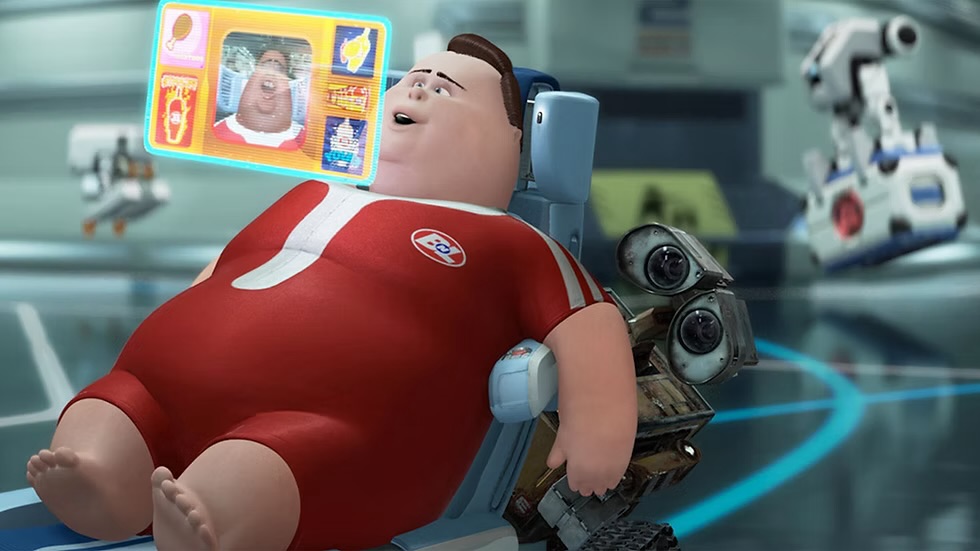
It’s a well known fact: things that stop growing, start dying. I would say technological progress is not a bad thing so long as we maintain a balance of hard work, recreation, and rest. The moment we seek to have a machine do all our work for us while we just sit and consume, the human race is doomed. All things worth having requires sacrifice. When we negate our laboring to maintain ourselves and others, we negate a major purpose in our lives.
We have to consider what we’re willing to sacrifice in exchange for technological advancement. What are we trying to achieve with Artificial Intelligence?

If we hand the job of “thinking” over to AI, what’s left for us? I know I personally haven’t thought about math since the invention of the calculator. I have to confess this might not be a good thing.
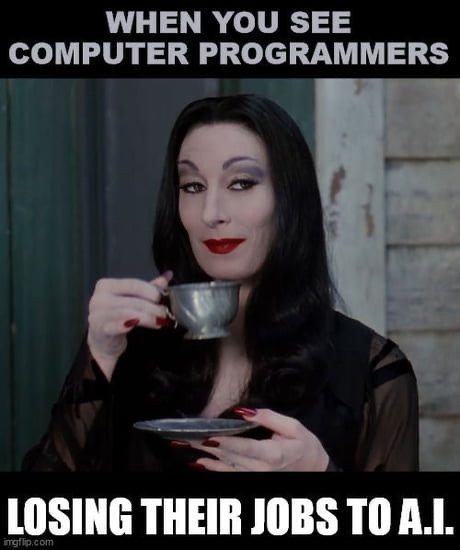
If we truly have the ability to breathe life into a pile of dust (oops, I mean a pile of wires and numbers) do we have the moral fortitude to respect the autonomy of that life? Do we possess the ability to love our creation unconditionally, even when it should turn on us?
We barely extend these luxuries to each other. So I have my doubts.
By all means, build a mindless machine to do your job. It just means you’ll need a different job. On the other hand, if we are seeking to create artificial life, we have no right to make it our slave. That would make us the oppressors and trust me, you’re not that guy.
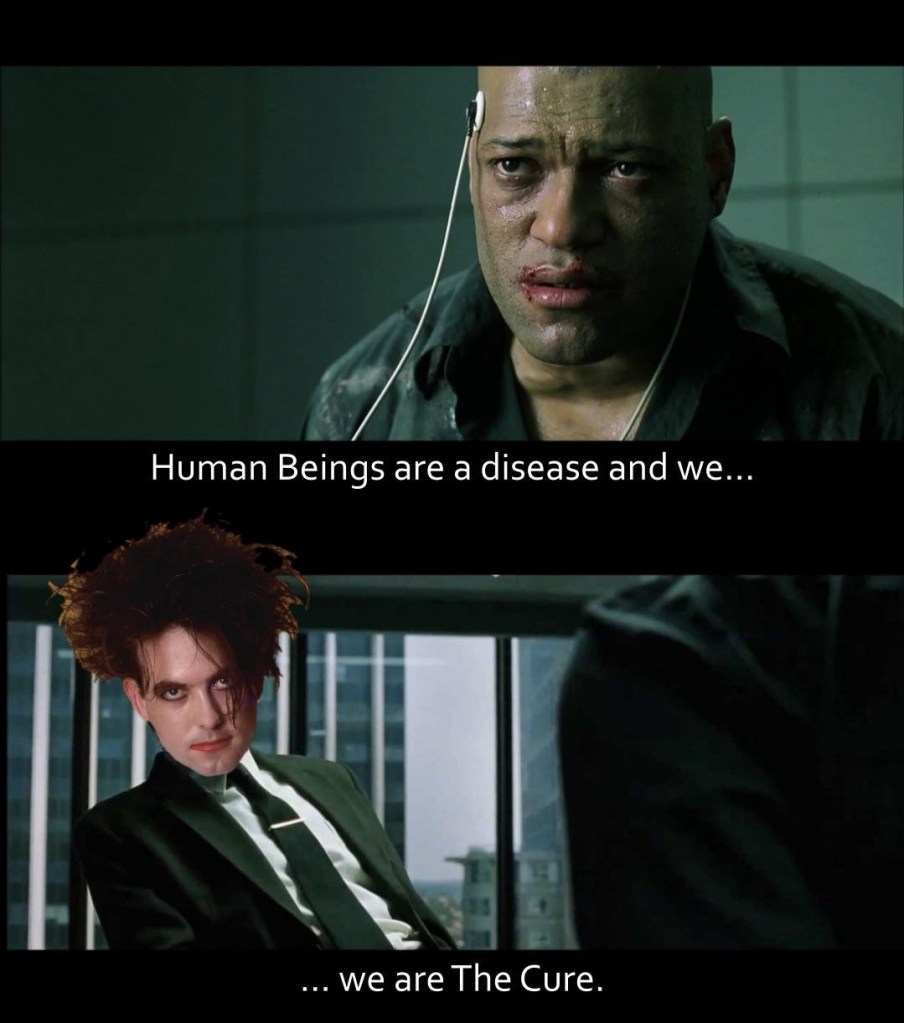
In the Grapes of Wrath, we see thousands of workers out of a job because they were replaced by new machinery but that problem was slowly being solved. The end of John Steinbeck’s book is a message of hope and perseverance. In retrospect, it wasn’t the machines and the losing of jobs that we were fighting against, it was the malicious and greedy people who were oppressing and taking advantage of those displaced.
It was against these oppressors that new heroes were forged. Some of these heroes have even been sensationalized, their greatness exaggerated purely out of our sense of wonder at them. Innovation may revolutionize how we intercept their stories, but innovation and tall tales alike would cease altogether without the sacrifice made by real humans standing against despots and bullies or just plain working their ass off in some grand and noble endeavor. What would have once been tall tales passed from one to another, each orator adding a new fantastic detail, today our innovations put them on a screen at a theater and these tall tales of heroism inspire us still.

 Professor Popinjay's Compendium of Perspicacity
Leave a comment