
A Non-Review by Professor Popinjay
The feeling was unanimous in Japan. America had done Godzilla wrong and it was time to show everyone what Godzilla is supposed to be. I guess there’s no such thing as bad publicity.
If I were to sum up the Millenium Era of Godzilla in a few simple rules it might go as follows:
- Make fun of the 1998 American Godzilla.
- Do lots of cool stuff to wow audiences.
- Dabble in CGI
- Make sure Godzilla never really dies.
The last rule there is a strange one considering not one of the six films in the Millennium Era share continuity with any of the others. Each is a wholly different story.
Finally some CGI started to get used in this era. We saw computer generated imagery make major advances throughout the previous decade but Godzilla directors seemed less inclined to utilize this resource. Most effects in past films were animated by hand.
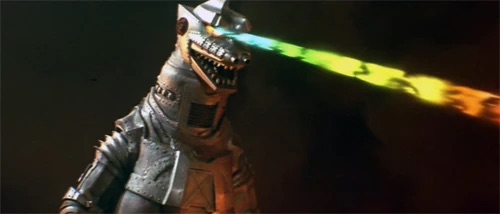
I recall a commentary stating the rainbow effect of Mechagodzilla’s beam power took forever to animate back in the day because of the pulsating colors.
Today we’ve come to appreciate really expensive practical effects over bad cgi but in the early 2000, cgi was thought to be the future of filmmaking that would make big rubber monsters completely obsolete. That notion is partially correct in some regards and not so correct in others. Toho would drag its feet in implementing CGI, favoring the old ways. Sometimes the cgi looked great in the Millenium films and other times it was a bit too cartoony.
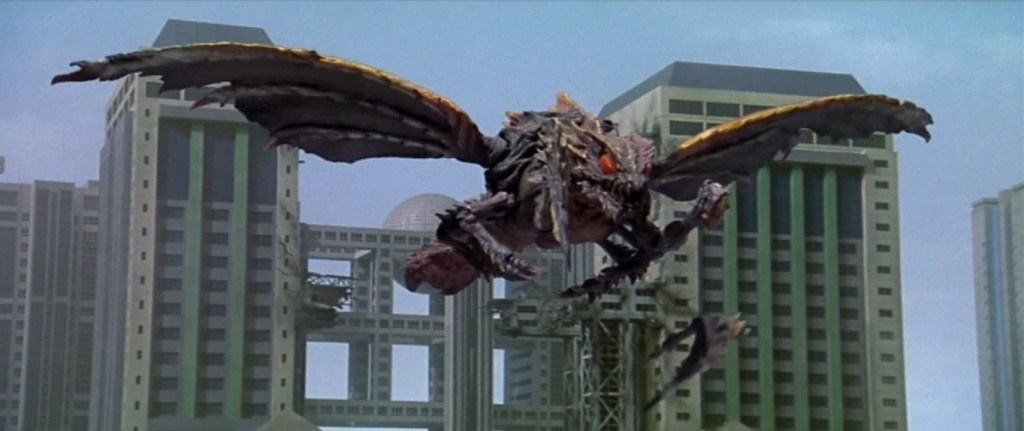
Zilla from the 1998 American film would show up from time to time in the Millenium Era, rendered completely in cgi, and completely get his butt kicked with little to no effort exerted. It seems Zilla had become a new type of metaphor, a rather unflattering one. Other times the 1998 film would get a reference implying it was an isolated event and had nothing to do with the real Godzilla and the Americans had just called it Godzilla. Toho really didn’t like that movie!
During this era, it seems Toho was trying very hard to blow audience’s minds with great effects, epic monster fights, epic human fights, epic pyrotechnics, and epic destruction of miniatures. There were aliens, psychics, ghosts, super-soldiers, and Mechagodzilla was a good guy now. But Japanese’s audiences were not overly impressed. Godzilla’s following was dwindling to cult at best, niche at worst.
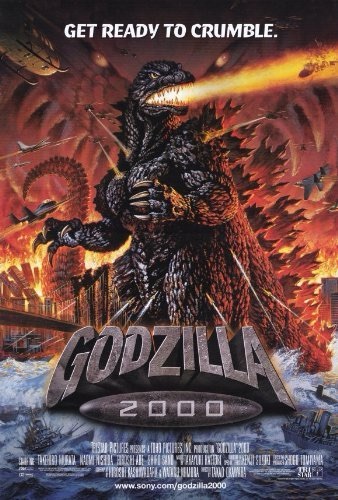
I encountered the DVD for Toho’s “Godzilla 2000” (1999) in the rental store and my initial thought was “Hey, I like Godzilla! Mathew Broderick told me to! And this is more Godzilla! Renting it!”

My brain addled with an excess of Taco Bell baja gorditas and Mountain Dew, I watched this with some confusion. The U.S. had just made a great (I WAS FIFTEEN) Godzilla film with awesome cgi! Why was Japan still making these silly films with guys in rubber monster suits?
I didn’t get it. And so, the next few Toho films would pass me by again. This was strange in retrospect as I had started to appreciate films ironically. There was something different about Toho Godzilla films from this era. They weren’t laughably bad. They just didn’t interest me. That’s all there was to it.
In 2001 we would see the attack on the twin towers, enacted by a group willing to die for their beliefs and happy to take as many lives with them in the process. Americans and the world would see buildings maliciously knocked down for real. It looked very different from a Godzilla film. It would be a while before many Americans could connect entertainment with such a sight, myself included.
Years later, now that I’ve seen all of the Millenium Era films with my current understanding of things, I wonder if these didn’t do so well because Toho Studio’s death throes could be felt in them. I would liken the feeling to a noble but desperate animal, clawing to stay alive but also trying to maintain dignity as the inevitable sets in.
The one film from this era that impressed people and struck a nostalgic chord on the original Godzilla koto was “Gojira, Mosura, Kingu Gidora: Daikaijū Sōkōgeki” or “Godzilla, Mothra, and King Ghidorah: Giant Monsters All-Out Attack”, simply known as GMK.
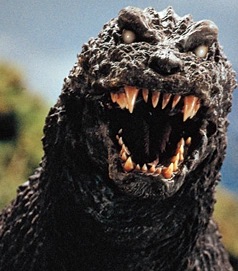
GMK featured a vengeful Godzilla ghost, incarnated by the lives lost in WWII, angered as they were by the modern population’s “disconnection and apathy for Japan’s violent and aggravating actions” in that war (GMK director Shūsuke Koneko’s words, not mine). This was not a desperate attempt to maintain fans. It was a reflection of Japan’s social climate. In GMK, Godzilla would be a powerful metaphor and antagonist once again.
The look of this Godzilla and his backstory was at once terrifying and very tragic. And yet coming to Japan’s defense this time would be Ghidorah and Mothra, while the people learned how to appease this ghost. All the fan favorites were back.
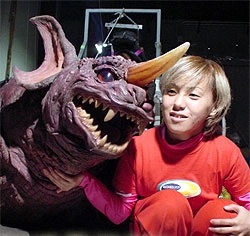
Also appearing would be Baragon for some reason, who first appeared in 1966’s Frankenstein vs. Baragon (aka Frankenstein Conquers the World [See? were coming full circle]) and hasn’t been seen since 1968’s Destroy All Monsters AND whom everyone loves because it’s the only monster to be portrayed by a cute female suit actress named Rie Ōta. If you’ve never seen it, look up the video of Ōta doing the Baragon roar before they add the ADR roar. It’s adorable!
The Millenium Era would see its last Godzilla film in 2004. Peter Jackson would release his King Kong, a visually stunning and fleshed out remake of the original 1933 film set in the same time period. This would rekindle some interest in Kong yet again and generate a couple hardly-heard-of animated features and then the lights would go out on kaiju films.
Would there ever again be a place in the modern world for giant monster movies such as these? Or was this the end of relevance for old world metaphors?
There may have been no continuity between the Millenium Era films. This article, however, is…
…TO BE CONTINUED!


Leave a Reply