

A Non-review by Professor Popinjay
!!!WARNING! POSSIBLE AND/OR DEFINITE MILD AND/OR PICANTE SPOILERS FOR THE FOLLOWING TITLES¡¡¡
- Tron (1982)
- Tron 2.0 (2003) [game]
- Tron: The Ghost in the Machine (2006) [comic]
- Tron: Betrayal (2010) [comic]
- Tron: Evolution (2010) [game]
- Tron: Uprising (2012)
- Tron: Legacy (2010)
- Tron: The Next Day (2011) [short]
- Tron: Identity (2023) [interactive e-book]
- Tron: Ares (2025)
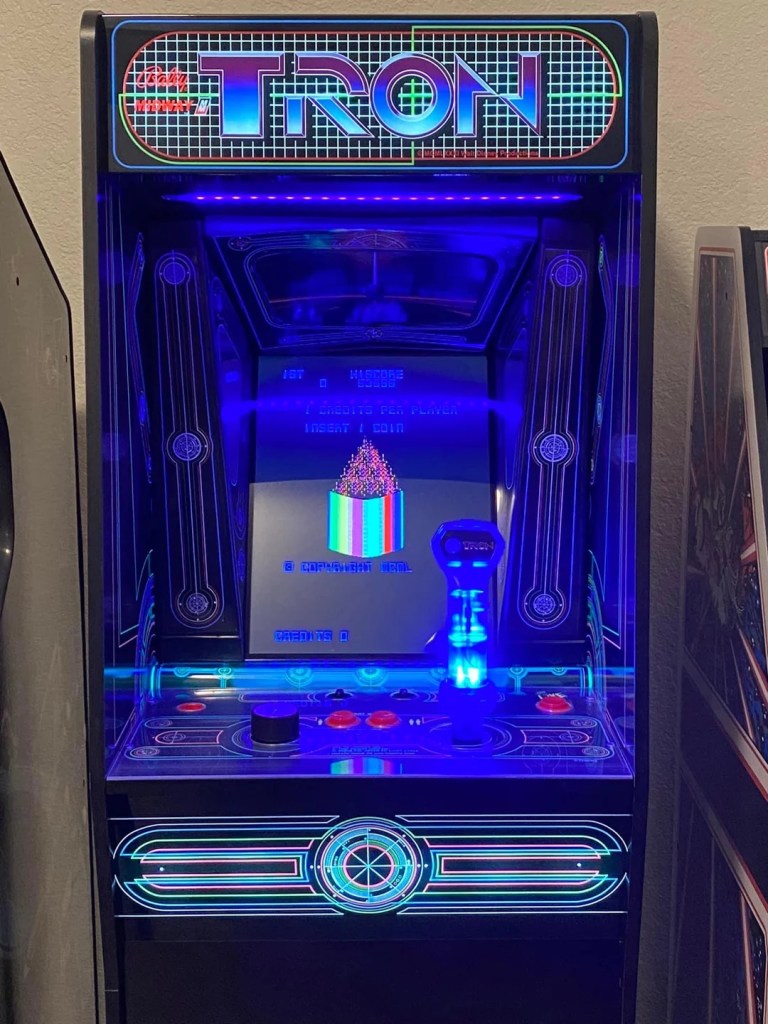
Arcade game tie-ins with Tron were an obvious direction for the merchandising even in a then fledgling (and soon to be crashing) video game market. The original “Tron” cabinet was festooned with neon colors and black lights and featured four mini-games to choose from, each based on a scene from the film, whereas “Discs of Tron” was a single screen game focusing specifically on the disc battle scenes. While the film pulled in 33 million dollars at the box-office, the Tron arcade cabinets would generate between 100-200 million dollars in coin drops! At a time when home video was still prohibitively expensive, the arcade was the next best way to re-experience the film (sort of), proving to be another ironic sign of how computers and video games would eventually come to dominate the media.
It would be twenty-one years before we’d see anything akin to furthering the Tron storyline with “Tron 2.0” aka “Tron: Killer App” on PC and home game consoles. This was much more than an arcade style series of minigames. This was an entire narrative presented in a critically acclaimed three-dimensional first-person shooter, a videogame that lets you see through the eyes of the avatar. How appropriate.
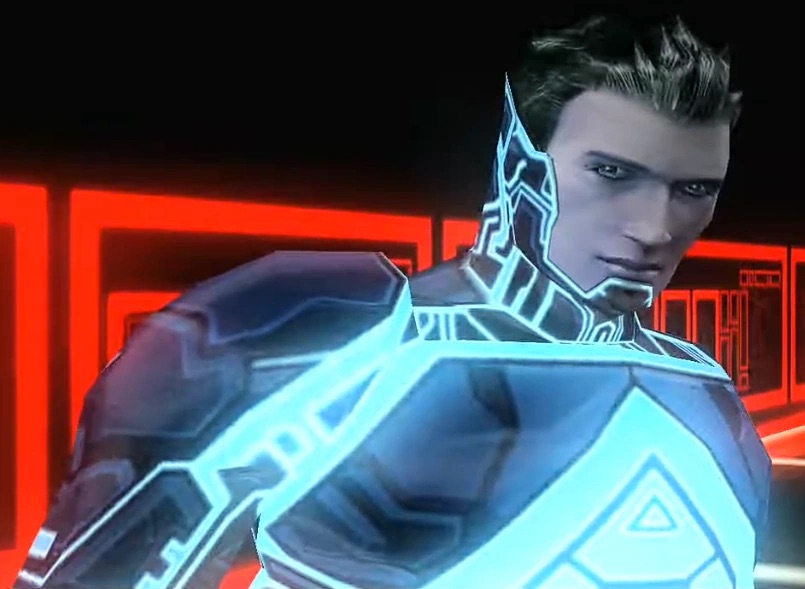
In Tron 2.0, you take on the role of Jet Bradley (seen above), son of Alan Bradley. Bruce Boxleitner would even reprise his role as Alan for this game. Upon Alan’s abduction, Jet is not-so-accidentally transported into the computer world to figure out what happened to his father and ultimately save Ma3a, the digitized persona of his deceased sister. (Her name pronounced Ma-THREE-uh, though I always want to read it as Mah-zah because the three makes me think of a Russian Z.)
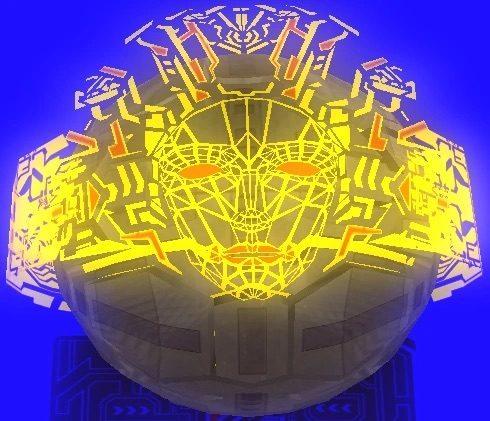
We also learn of something called Tron Legacy, which obviously has nothing to do with the 2010 film of the same name which wouldn’t be out for another seven years. In Tron 2.0, Tron legacy is described as an update to the original TRON program. It’s later revealed the real purpose of the Tron Legacy program is to kill all rogue Users in the system, Users being actual humans in this case. Hilarity ensues.
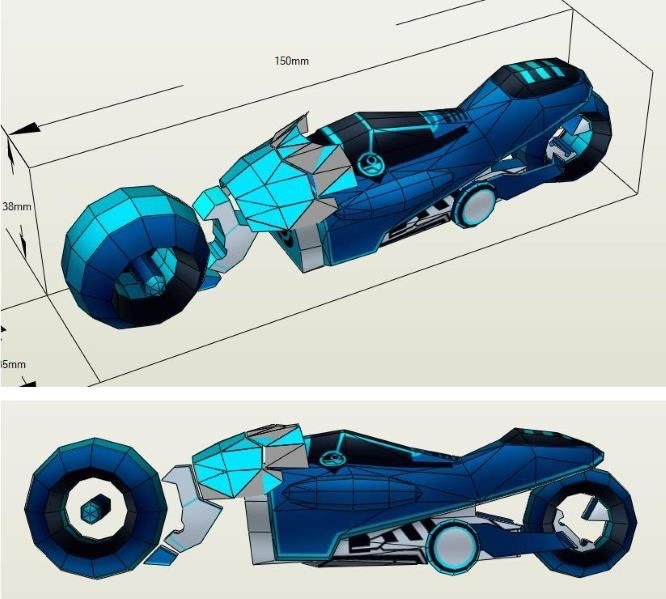
While some environments were a little repetitive, the addition of ventures into the internet were interesting; as well as the corrupted systems, ravaged by a virus, with broken, fragmented walkways and glowing green chasms. Also, the updated design of the light-cycles was pretty rad.
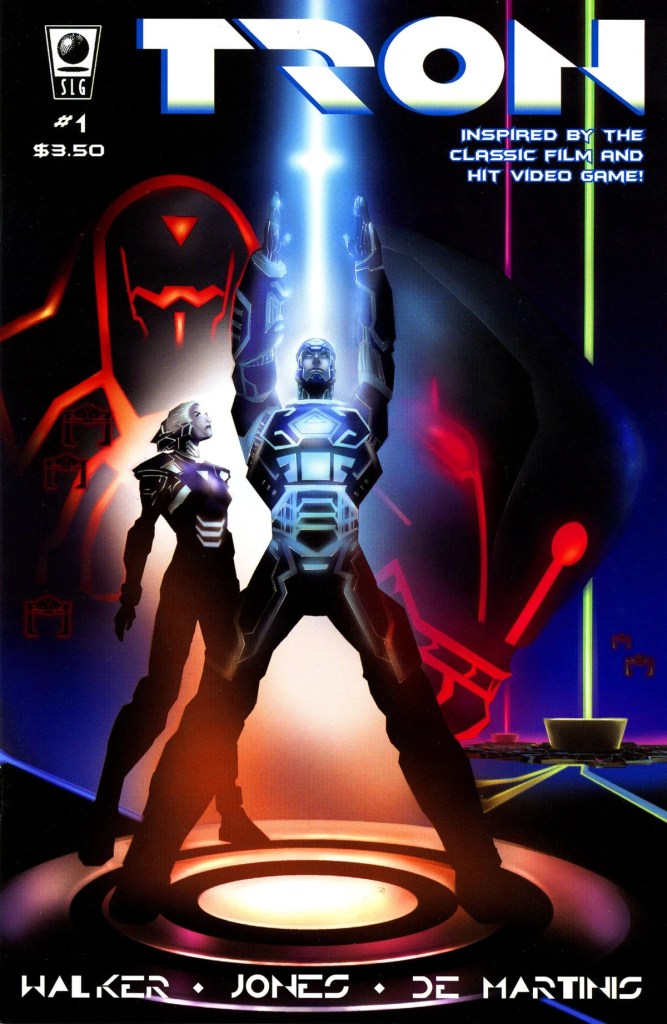
A short comic series connected to Tron 2.0 would be published in 2006 (seen above). “Tron: The Ghost in the Machine” (not to be confused with The Ghost in the Shell) tells the story of three different copies of Jet Bradley, each at war with the other within the computer world. In this installment, the Tron Legacy program is referred to again. However, now its function is less malicious, containing the code to bring sentient programs into the real world. A fascinating concept that would ultimately not be explored here.
I’m guessing these programs and codes just have the name “Tron” attached for aesthetic reasons and are not “sentient” programs who talk and walk around the digital world? I don’t really know. It’s kind of confusing why everything is called Tron. He’s barely involved. I think some writers may have forgot along the way, programs are characters.
Sadly these storylines, as enjoyable as they were, would be swept under the rug to make way for the actual film titled “Tron: Legacy”. Alan Bradley’s son and daughter would not be mentioned, assuming they exist at all in this new canon. Neither would we hear of Alan’s kidnapping and subsequent adventures on the grid. And “the grid” itself would be a term used to refer to everything in the computer world, not simply the light-cycle games as in Tron 2.0. As far as the rest of the story goes, Tron 2.0 and “The Ghost in the Machine” never happened. Only the title “Tron: Legacy” would be repurposed and the notion of bringing characters born on the grid into the real world would be the unintentional foreshadowing to end all foreshadows.
In 2010, the film “Tron: Legacy” was released, starring Garrett Hedlund as Sam Flynn, son of Kevin Flynn. In that same year we would also get a comic tie-in called “Tron: Betrayal”. This narrative, taking place before the film chronologically, depicts Kevin Flynn’s difficulties balancing real life with managing the computer world he’s created. In response to these difficulties, Kevin creates a new Clu, a program copy of himself with the purpose of managing “the perfect system, a digital utopia.” Clu finds himself frustrated at this endeavor due to the spontaneous emergence of sentient beings from the grid itself called Isomorphic Lifeforms or ISOs, who have no specific programming or purpose. Believing the ISOs to be unstable and imperfect, Clu seeks to eradicate them and seizes power from Kevin Flynn to do so. As a result Kevin escapes to a safe house on the grid, unable to exit to the real world.
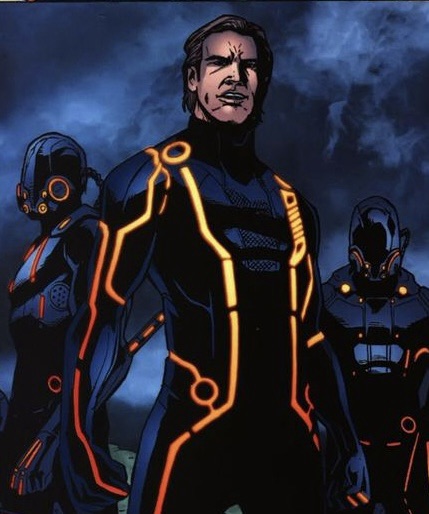
Orange and black is the new orange and white.
Also in 2010 we got the videogame “Tron: Evolution” which is pretty much the same story as depicted in the Tron: Betrayal comic but with the added playable avatar character Anon. Despite a clunky videogame storyline with aspects clearly added solely to give the player something to do, this narrative is considered more canonical than the comic for some reason. The only significant differences between these two versions of the same story that I can detect is that Clu’s takeover of the grid in “Evolution” was hostile, incurring the derezzing of several sentient programs. In “Betrayal” Clu just establishes himself as leader of the grid after the ISOs are all but eradicated. Personally, I feel these differences are insignificant and one could argue that things we saw happen in one story may have still happened behind the scenes in the other.
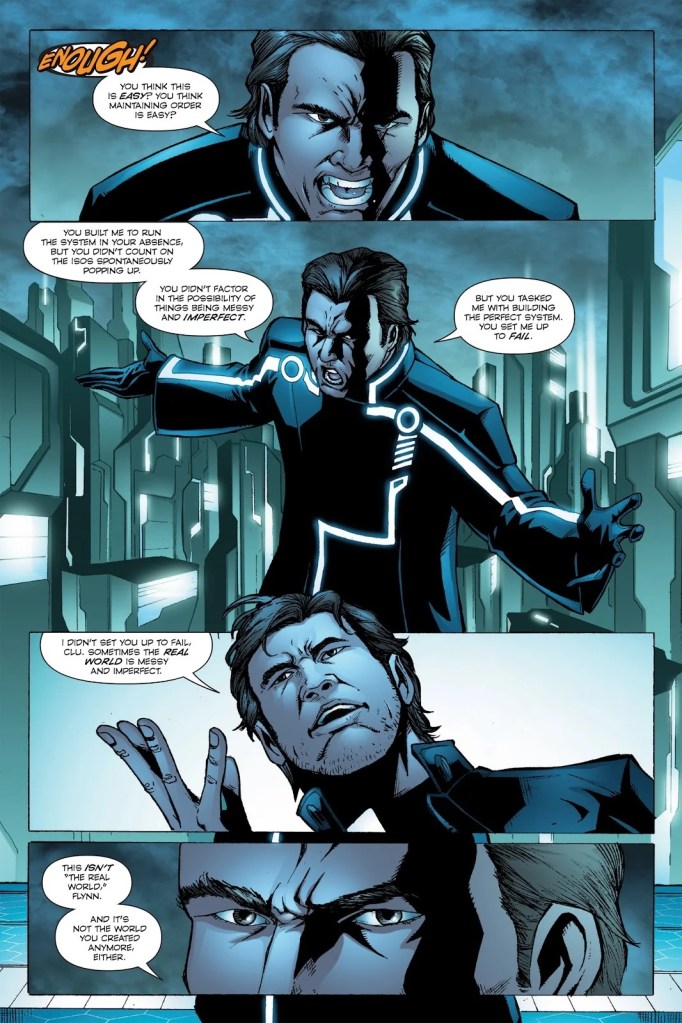
This is where I find a strange moral dilemma when comparing Kevin Flynn and his program duplicate, Clu. Flynn created Clu. He is responsible for his programming and he could supposedly change that programming at any time. At least it’s never explained why he couldn’t. The only hang-up to doing so that I detect is Flynn’s predilection to regard the programs as people.
I suppose it’s understandable considering they are sentient but their will seems dependent upon their programming imposed by Flynn. Arguably, the programs do not necessarily have a free-will so how sentient can they be? What kind of utopia is dependent on the populace having no real free will? I believe these are concepts Kevin Flynn understands better as his story unfolds.
With the spontaneous emergence of the ISO’s who are not governed by any programming, Kevin Flynn’s motivation of creating “the perfect system” is altered to include these anomalies. But Clu, governed by Flynn’s programming, cannot change his function. Flynn seems to regard Clu’s inability to change despite his influence as one might regard a friend who is making poor decisions.
Ironically, Flynn’s “moral” decision to not interfere with Clu’s programming ultimately leads to Clu being violently derezzed. Clu is almost a strange parallel to Les Misérables’ Javert. He can’t change so he just has to die. That seems sad and unnecessary, especially considering Kevin Flynn is responsible for all of him and seemingly could have changed him at any moment.
I guess the words of J.M. Barrie apply here,
“…but then there would be no story.”
And a story there is.
Look for Tron to Tron Ares (Part 3 of 4) coming soon!


 Professor Popinjay's Compendium of Perspicacity
Leave a reply to sopantooth Cancel reply