
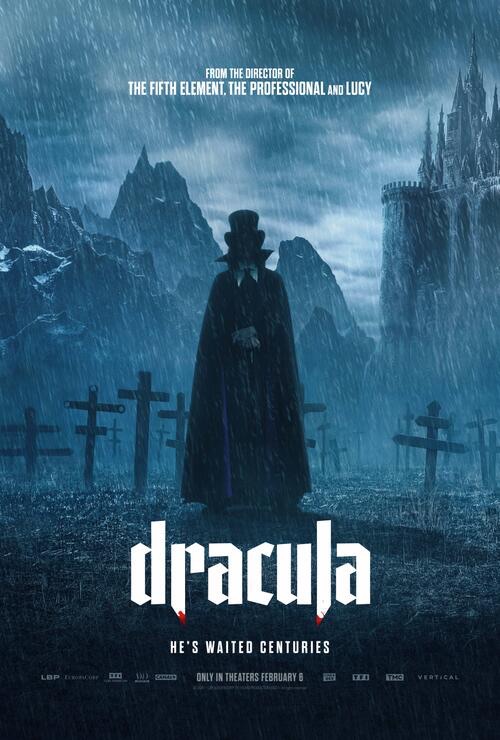
Also known as: Dracula: A Love Tale
A Non-Review by Professor Popinjay
(2025…or is it 2026?)
I’m trying not to have spoilers but this is based on a story published 129 years ago so give me a break.
Luc Besson’s Dracula was released in France in July of 2025 long before it was finally released in the States this February of 2026, hence the confusion of release dates.
Fascinated as I am with classical “horror” literature and its many interpretations hence, naturally I was interested to see this new Dracula film.
Then I learned it was directed by Luc Besson and I became less interested. I find most of his films to be rather silly. The Fifth Element was silly but decently fun. Valarean was interesting to look at, I suppose, but the plot and dialogue put me to sleep.
My wife points out that valarean root is supposed to put you to sleep, so maybe I shouldn’t have been so surprised.
My main complaint of Besson’s work is his very shallow and inaccurate depictions of what is supposed to be Love. He clearly doesn’t get it and yet it’s at the heart of all he does.
And now he’s created a “romantic” depiction of Dracula, taking many cues from Francis Ford Coppola’s film Bram Stoker’s Dracula (1992).
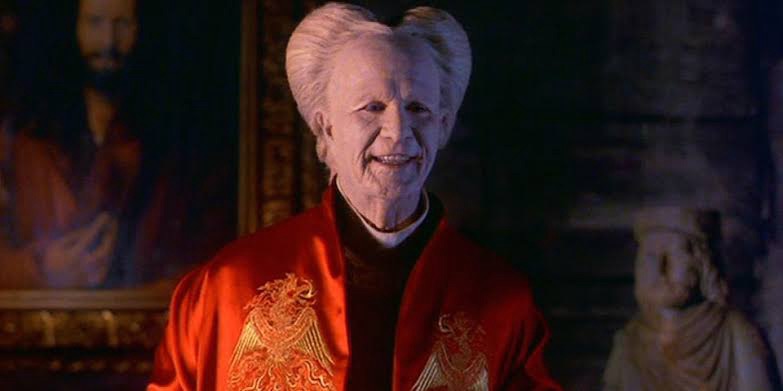
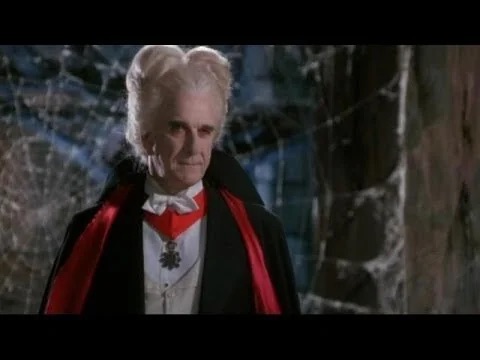
After a week of boycotting Luc Besson, eventually I decided I needed to see this, just so I could find out how right I was.
I’m always baffled by this origin story. It makes sense from the point of view of all parties involved but considering the history of the crusades and the “Holy” Roman Empire, it’s clear no one grasps what’s really going on here.
As you may recall, Byzantine Emperor Alexios I Komnenos was requesting help from Western European countries to assist in holding back the Seljuk Turks who had taken over most of Asia Minor at the time (1090 AD). This request, combined with a speech by Pope Urban II, which suggested military recapture of the Holy Land, resulted in a fanatic fueled war for land and imposition of beliefs that lasted 600 freaking years! Good God!
Never underestimate the stupidity achievable by mixing blind faith with politics.
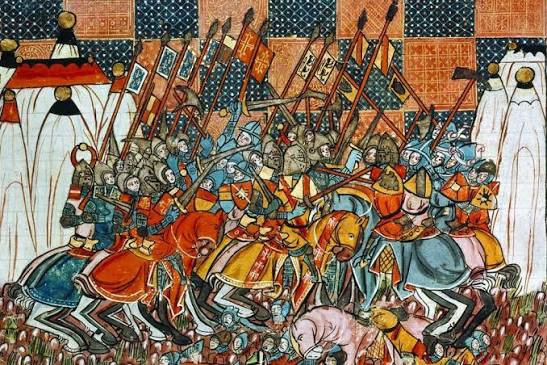
During the Late Crusades of the 15th century, Vlad Țepeş III of the Order Dracula fought the Ottoman Turks ferociously in God’s name, likely never once considering whether these crusades were truly God’s will or not. Considering Romania’s geographical location, I’m sure he didn’t have much of a choice regardless of any fanaticism. Nevertheless, his allegiances secured him the Walachian throne on more than one occasion. The political shrewdness of Vlad’s exploits are undeniable.
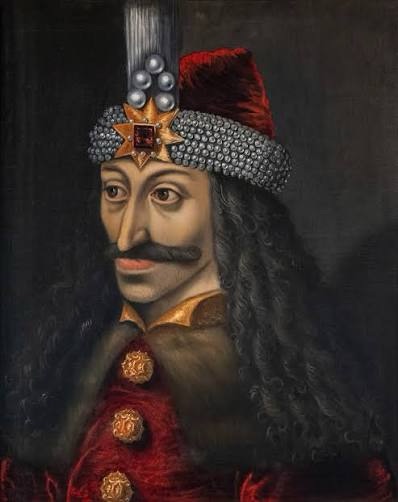
Where our romanticized version of this story begins, we find Bram Stoker’s fictional counterpart to Vlad the Impaler, feeling rather cocky regarding his service to God and feels he is owed one small favor: that his beloved Elizabeta be impervious to death.
Let me put this situation into perspective for you by way of a dialogue I once had with one of my kids:
Child: Hey Dad! I’m going to slap everyone who doesn’t like you and you will give me candy!
Dad: What? No! Don’t do that!
Child: But don’t you want people to like you!?!
Dad: Of course but slapping them isn’t going to make that happen! Please don’t!
Child: But I’ve threatened to slap people and they instantly said they like you all of a sudden. Now give me candy!
Dad: That’s not them liking me, that’s them being afraid of getting slapped by you! If anything that makes them not like me even more.
Child: The people who run your company told me to do this. Now candy me up, baby!
Dad: I don’t have a company. I don’t know who you’re talking about! I’m not giving you any candy for slapping people in my name! I DON’T want you to do that!
Child: You’re not gonna give me candy?
Dad: NO!!!
Child: After all I’ve done for you!?! And all I ask for is an infinite supply of candy!?! Mark this! You are my enemy! I shall now learn black magic from the Scholomance and ride a dragon through the Carpathian Mountains while creating storms!
Dad: Uhhhhh okay?
(Scene)
British philosopher and mathematician Bertrand Russell said “The more you complain, the longer God makes you live.”
Dracula has the ultimate blasphemous complaint here and it seems God is content to make him live indefinitely until he should learn why his request is a stupid one. It’s a good argument for living in contentment. It might suck for Dracula (pun intended) for the next few centuries but, arguably, he’s doing less eternal damage to humanity as an undead creature of the night than he was as a living champion of “Christendom”.
Don’t expect to learn this subtext in the film though. These are just my own musings based on centuries spent listening to my Moldovan aunt who would tell us these stories, wide-eyed by the fire.
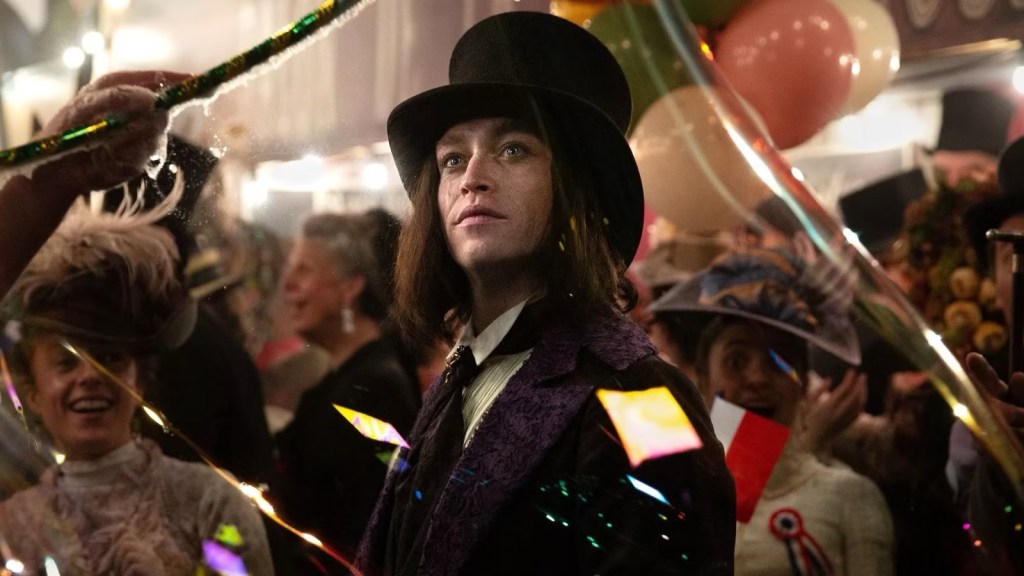
The film itself was entertaining enough. Caleb Landry Jones (who ironically was in a film called Byzantium) was less impish than Gary Oldman as the titular character. Oldman is a hard act to follow but he did fine. I make the comparison simply because Besson’s film is so similar beat for beat to Coppola’s.
Christopher Waltz really brought the film home for me. His portrayal of Abraham Van Helsing was very realistic. Too often people in period films act like they’re in period films. I understand people are different from one era to another but they were also human. Waltz presents a very human person from the Victorian era. It’s refreshing.
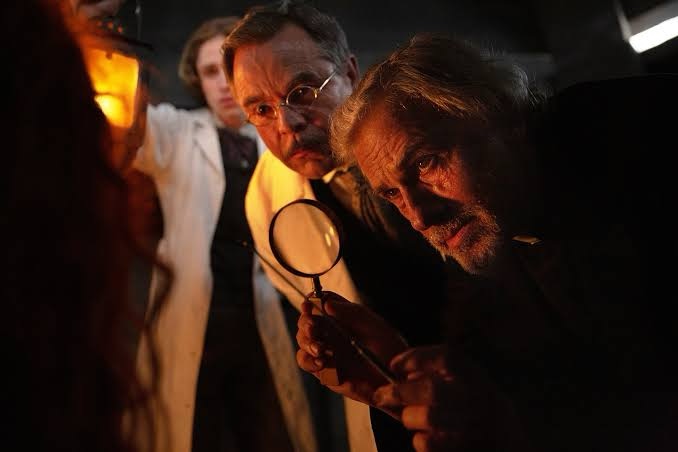
I was similarly impressed with Matilda De Angelis. Her character’s duplicity switching from being sweet and human to bloodthirsty and depraved a second later is effective in making me believe vampirism (or hemophagy as Van Helsing calls it during his forensic assessment) is a real disease more than a demonic influence. Of course Van Helsing DOES eventually take his research into the metaphysical and deduces further uh… theological findings?
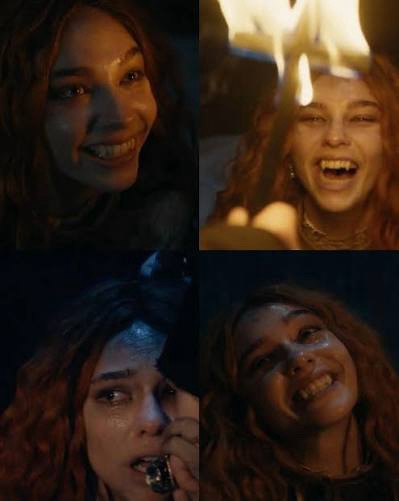
I appreciated Van Helsing not just hammering stakes into the heart of every vampire he came across. In fact he was very collected and methodical about the hunt. It made for a most unique ending.
It’s a temptation to compare this film to Bram Stoker’s original book but it’s such a vastly different story, it really should be considered its own thing. Don’t watch this and go on thinking you may as well not read the book. Besides, understanding the differences is half the fun.
I have to say, while the demonstration of the main characters’ love at the start of the film was all the shallow and carnal things I expected from Besson, the demonstration of true love at the end impressed me. It made me think “Okay, maybe Luc Besson gets it.” Then I recall details from Besson’s personal life and think “Nahhh.”
Either way, just please don’t show “love” happening with a sex romp/food fight montage again.

There were some silly things that reminded me of scenes from The Fifth Element or Valarean. The film spent a strangely long amount of time on the creation of Dracula’s perfume. What the fragrance enabled him to do was ridiculously demonstrated via humorous dance scenes that seemed out of place for the film. Dracula’s cgi gargoyle servants were a step too far into the fantasy realm for my taste too. It’s like Luc couldn’t decide whether to ground the film in some level of reality or go full bore fairy tale. I don’t mind one or the other, but it’d be nice to have some consistency.
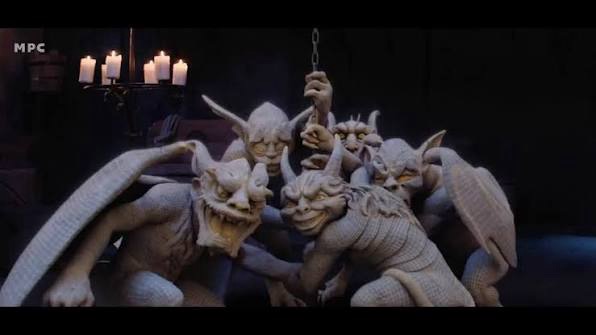
The necessity of the perfume is confusing too. Dracula clearly has powers. Why does he need the perfume? In some versions of the story Dracula is not fully aware of his mystical capabilities and it’s revealed by Van Helsing that he is constantly testing the waters (figuratively speaking) to figure out just what exactly he can and can’t do. In other stories Dracula’s mystical abilities are not inherent with his accursed longevity and come as a result of centuries spent studying arcane magic. Again Besson seems wishy-washy as to what version he wants to go with but, so long as it results in a human Christmas tree formed by lusty writhing nuns with Dracula as the tree topper, I don’t think he cares.
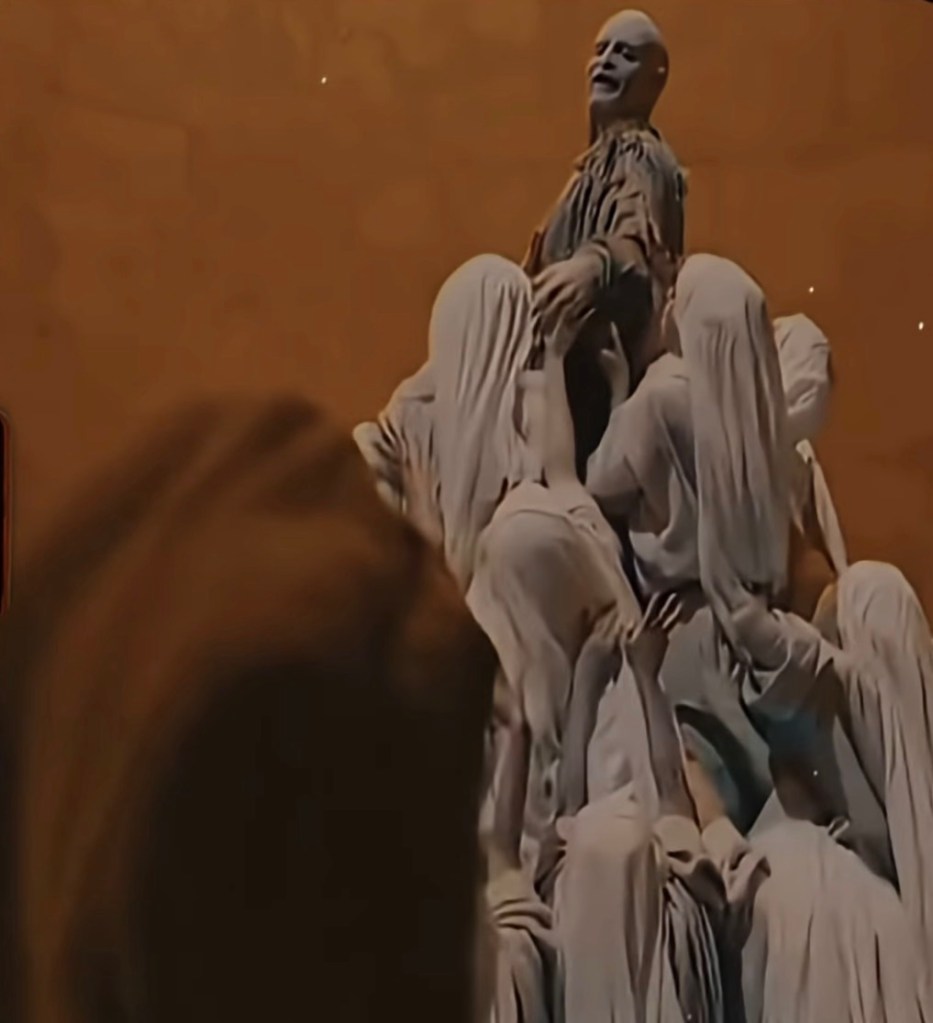
Ultimately I liked the film even with its flaws. Between this one and Coppola’s, I think this is my preferred version. I miss Gary Oldman from Coppola’s film but Waltz’s “Van Helsing” was great and as much as I love Keanu Reeves as a person, I just did NOT like him as Johnathan Harker. The Harker character is really downplayed in Besson’s version to make room for focus on Dracula which is a welcome change.
I could rant about Dracula films forever but I should probably stop before I’m tempted to spoil something. If you’re a Dracula fan, I imagine you’ll enjoy this.
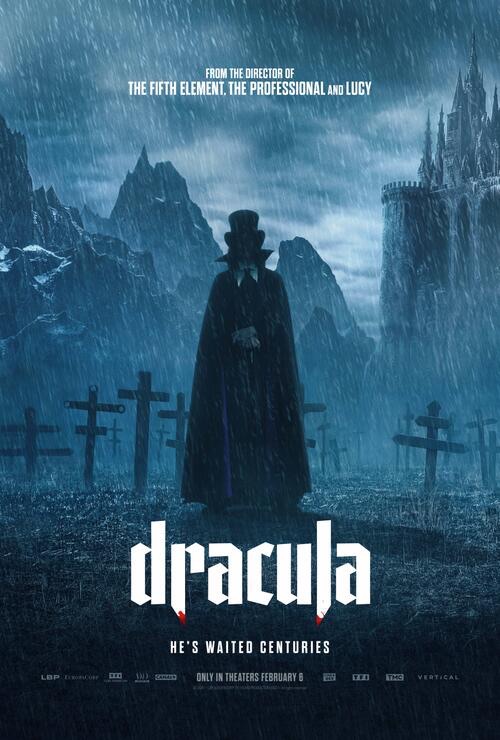
Poster Art!

 Professor Popinjay's Compendium of Perspicacity
Leave a reply to sopantooth Cancel reply