
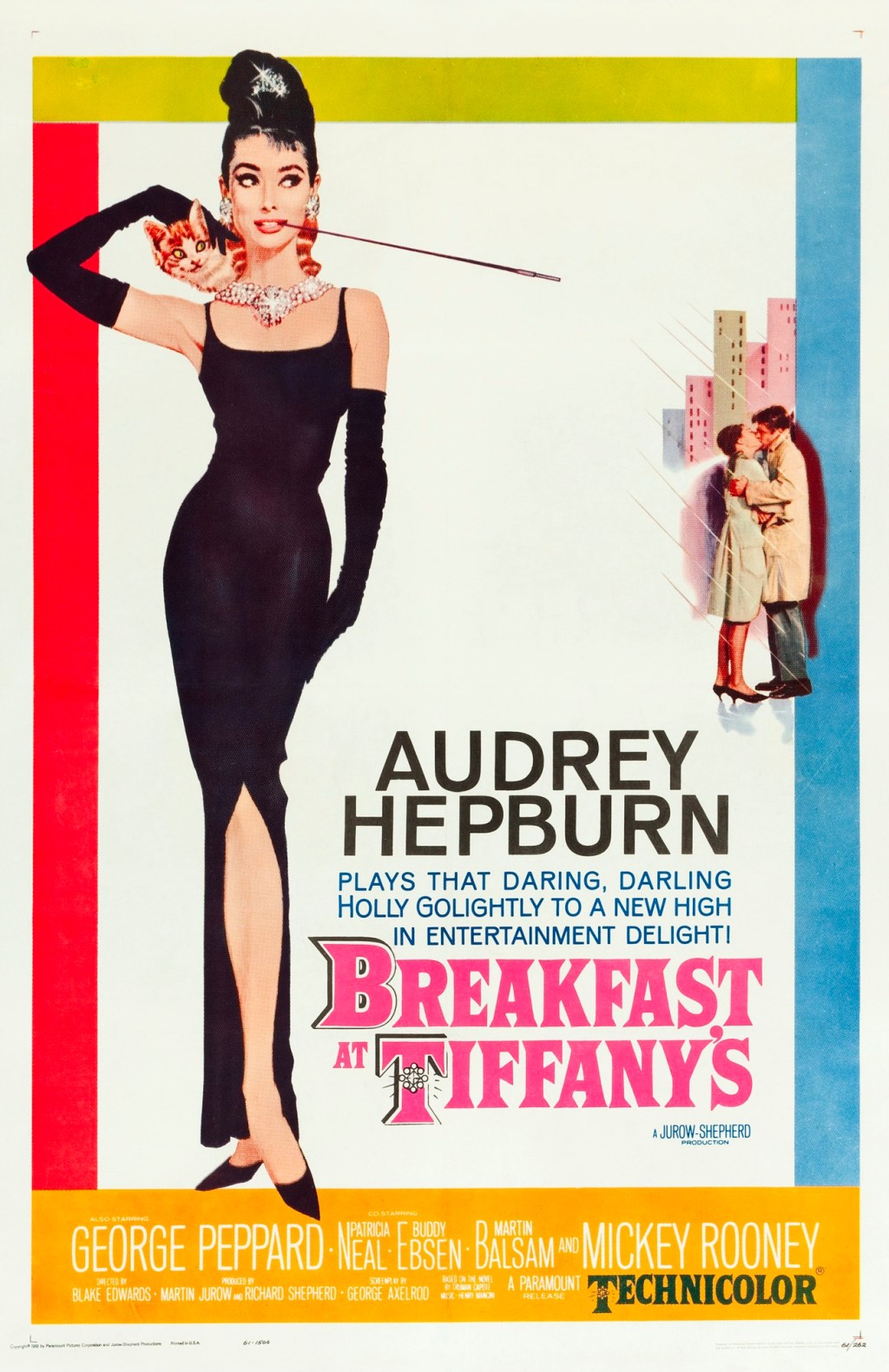
A Non-review by Professor Popinjay
(1961)
I’d always avoided this movie because it was described poorly to me. The descriptor explained, “It’s about a male prostitute who meets a female prostitute and they fall in love.”
This description horrified me as I had just given a copy of the film to a rather conservative couple and I feared instead of bequeathing them with a charming classic, I had bestowed some raunchy sex romp.

And this IS a classic, isn’t it? It was written by Truman Capote, that funny little man from Murder by Death (1976) who stuck his actual tongue through a hole in a painting of a dog and so freely attacked the grammar of a Chinese stereotype; the same funny little man who would simultaneously bring the true crime genre into the mainstream with his non-fiction novel In Cold Blood (1967) while ultimately affecting the proceedings of the accused in the process of interviewing them. HE wrote THIS, what I would consider a polar opposite to anything remotely close to true crime.
There’s even that song called “Breakfast at Tiffany’s” by Deep Blue Something, a mind-bogglingly stupid song that features not much more than the chorus citing the film as the one thing the couple kind of have in common in their failing relationship. Whoopie. But it goes without saying, this weird flighty movie has affected a lot of people and I needed to know why.
Thankfully the description given to me by that misinformed person (who had clearly never seen the film) is way off from what this film is actually about… but not quite.
Audrey Hepburn plays Holly Golightly (Which I have learned actually IS a real Scottish surname and wasn’t made up for the film despite how apt it is). Holly is a seemingly carefree whimsical woman who makes her living by going to the lavatory.

This requires some explanation. The statement of “being paid 50 dollars to go to the lavatory” came up frequently in the film and was very confusing to me. Turns out this was code for being paid to accompany men to a variety of reputable social functions. In essence Holly was an American geisha… an escort in the truest sense of the word. Sex was not a requisite for payment. In fact, Holly seemed to go out of her way to avoid contact with anyone seeking further accompaniment beyond the evening’s public event.
This transaction was presented in a very subtle way, I think primarily because the notion was still very faux pas when the film was made, despite its innocence in nature.

The male lead of the film was Paul Varjak (played by George Peppard Aka Colonel John ‘Hannibal’ Smith from the A-Team [1983-87]). His entanglement was just as subtle but obviously less reputable. Paul was being paid by a wealthy older woman for… uhhhh, shall we say more private services?
So there’s some level of truth to that terrible description I got and yet this is not what the film focuses on.
Holly is a whirlwind of activity, some of which makes sense and some of which seems completely out of the blue. Meanwhile, Paul (whom Holly calls Fred because he reminds her of her brother) follows her around trying to figure her out.
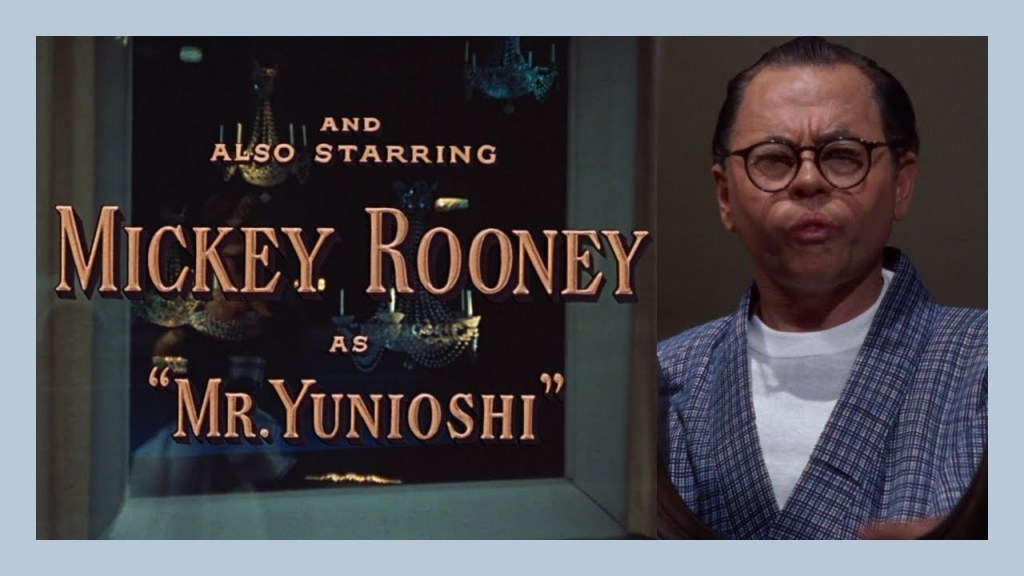
And figure her out he does. Here’s MY conclusion: Truman Capote is a VERY good writer. While he’s not without his faults, research reveals he is at least not to blame for the abominable “comic” portrayal of the character Mr. Yunioshi, insensitively played in the film by stereotype-perpetuating Mickey Rooney. Reportedly, Capote was not pleased with the film adaptation, especially in regards to how Mr. Yunioshi was represented, a strange opinion when compared to how viscous Copote’s character was to Sidney Wang in Murder by Death.
But the fact that this seemingly aimless and wild story could culminate in the revealing of such deep and troubled characters was astounding to me.
Incidentally, the book and the film have very different endings and personally I think the book ending makes much more sense. The happy ending of the film does not strike me as a truly happy ending according to my own experience. Both of these characters are going to need loads of counseling and therapy and possibly medication.
I’m not coming down on mental health at all. I understand there are varying degrees of functionality and the stigma against mental illness is often an unfair association. Even the connection of the word “illness” is most often a misnomer.
Psychological analysis of Holly Golightly reveals symptoms of Borderline Personality Disorder, a condition widely regarded as misnamed as there is nothing “Borderline” about it. BPD is characterized by difficulty with emotional regulation, intense mood swings, unstable relationships, and impulsive behaviors. In the film, Paul, without being a psychologist, pretty much pieces all this together about Holly as well as the “why” behind it all, falling in love with her in the process.
I am by no means an expert on the subject of BPD but I have experienced the symptoms through a relationship. I can tell you, Holly Golightly had all the signs. Watching Paul fall for her was a frustrating ordeal for me because I felt I knew what was in store for him and it wasn’t going to be fun.

I’m not saying I hated the film. I think it’s an important piece and very well executed as far as the acting and cinematography, and the writing behind it is very good. I just don’t find this kind of drama ultimately very entertaining. That having been said, there are some funny parts, and John McGiver as the Tiffany’s salesperson was so humorously delightful, I now find myself trying to emulate his absolutely unpretentious professionalism; a rather difficult prospect for me considering certain of my clientele.
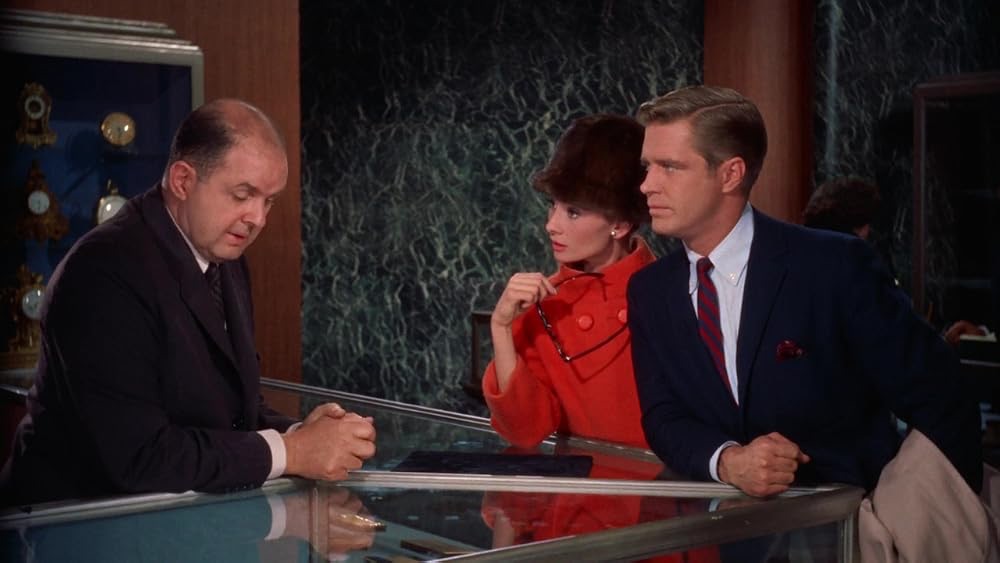
attempts to find something romantic for under 10 dollars for the handsome couple. He does so without a hint of condescension.
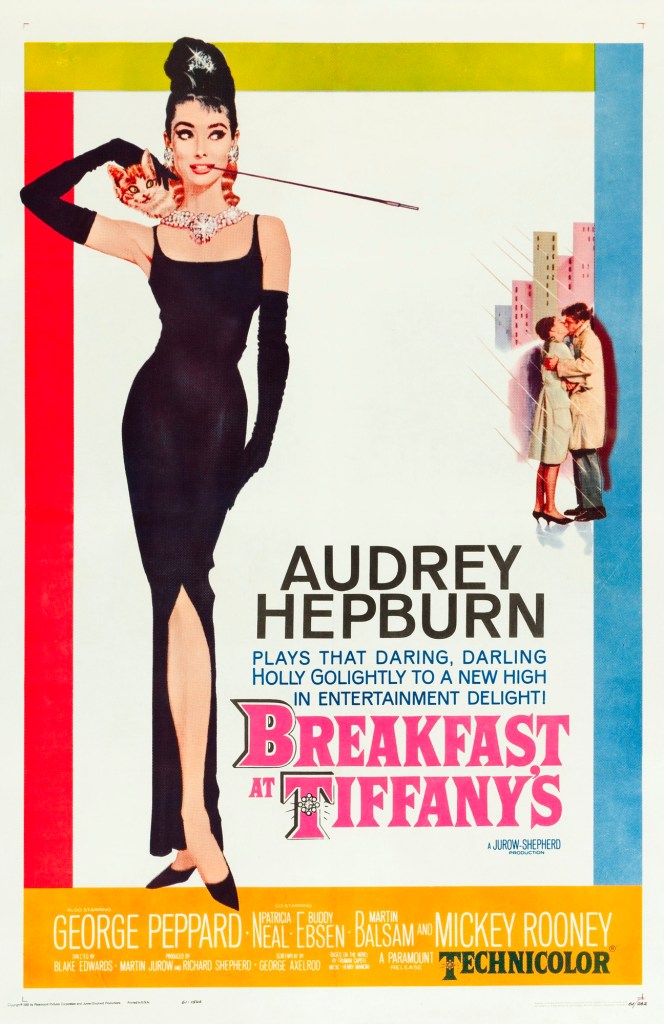
Poster!


Leave a comment