
A Non-review by Professor Popinjay
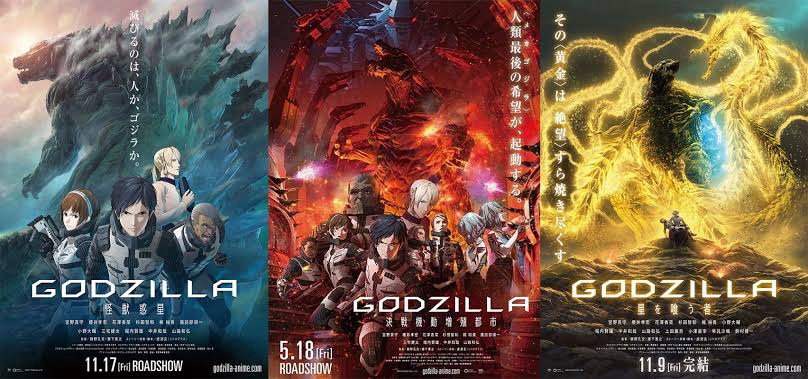
This review will focus on the anime directed by Hiroyuki Seshita and Kôbu Shizuno:
Godzilla: Planet of Monsters (2017)
Godzilla: City on the Edge of Battle (2018)
Godzilla: Planet Eater (2018)
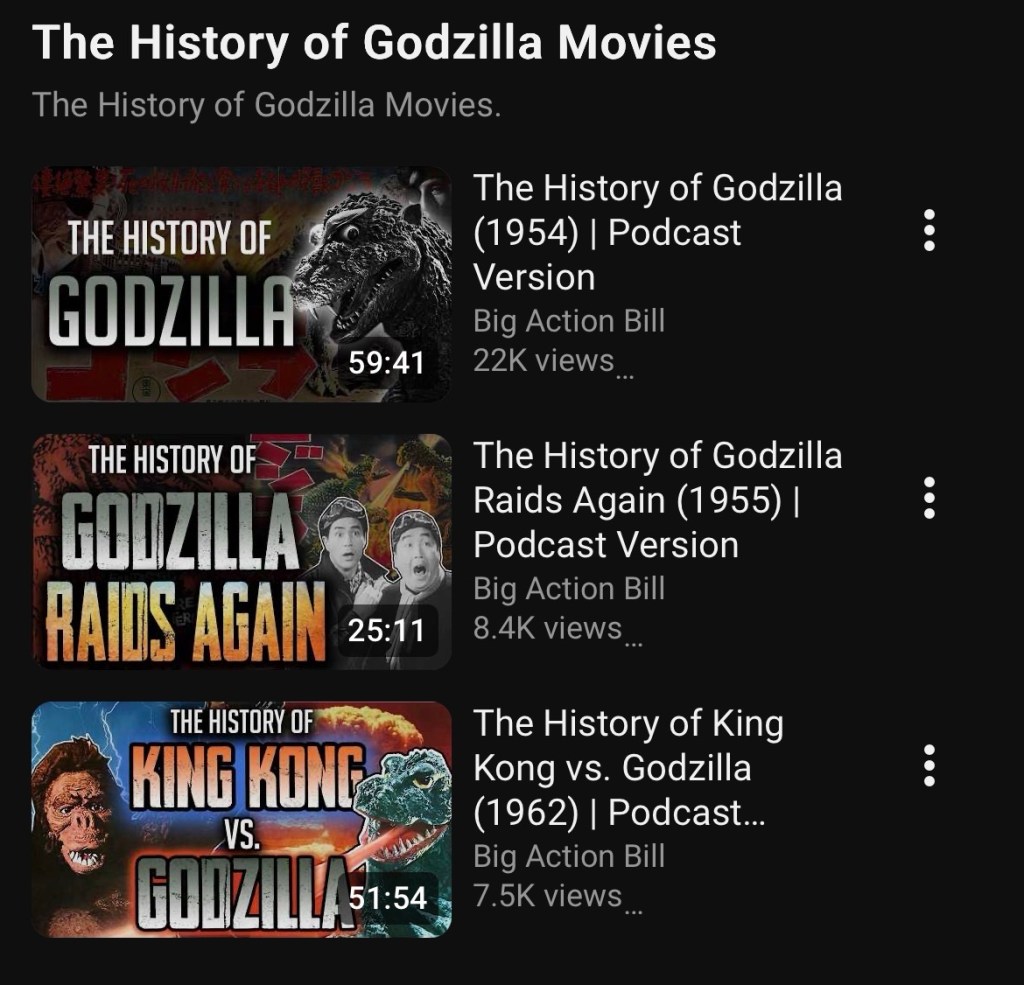
When I wrote my 10 part Godzilla treatise in 2025 (Godzilla: Who is this Godzilla Person Anyway?) I only briefly skimmed over these installments. This was in part because they are a bit of an outlier to the rest of the franchise and also because I personally enjoyed them thoroughly and wanted to do them more justice than a simple mention. I also resolved to not initiate this Non-review until YouTuber Big Action Bill completed his own examination of this trilogy. His Histories of each Godzilla film have been essential research for all of my Godzilla Non-reviews.

Big Action Bill has been working on moving to Japan and has been converting his histories to audio-only to comply with Japan’s lack of fair-use laws. Producing his assessment of these films has taken a while. Once again I’ll say, if you’re interested in an in-depth look at the production aspects and deep contemplation on the lore and philosophy behind this 2018 Godzilla anime trilogy, I highly recommend his videos on YouTube.
In my efforts to absorb everything Godzilla, obviously I would come across Godzilla: Planet of Monsters, City on the Edge of Battle, and Planet Eater. And even with a newfound and very rudimentary knowledge of who and what Godzilla was according to Japanese culture, I could tell these films were VERY different from the other non-anime Godzilla films. They are so different in fact, a lot of hardcore Godzilla fans took issue with them. I can certainly understand why they would and yet, I do not consider myself a hardcore fan. I feel I was able to watch these objectively… or unobjectively. I forget which one means I was unfettered by years of rigid and devout fandom in this context.

While Godzilla films haven’t been exactly formulaic from one era to the next, there are definitely some common tropes. You had the human aspect which, while necessary for storytelling and relatability to the audience, always seems a bit lackluster when compared to giant kaiju fighting each other. Then of course you have the kaiju themselves, the whole point of the films. They need to fight and they need to destroy stuff, BIG stuff! Finally, there’s usually some deeper message or warning to us. Godzilla has been a cautionary tale from the beginning. Sometimes the warning is against war and weapons of mass destruction. Sometimes it’s an environmental message. Whatever the message, it’s always there; some point insinuating there are things we can do to be better and NOT accidentally create giant monsters who attack Japan… specifically Japan for some reason.
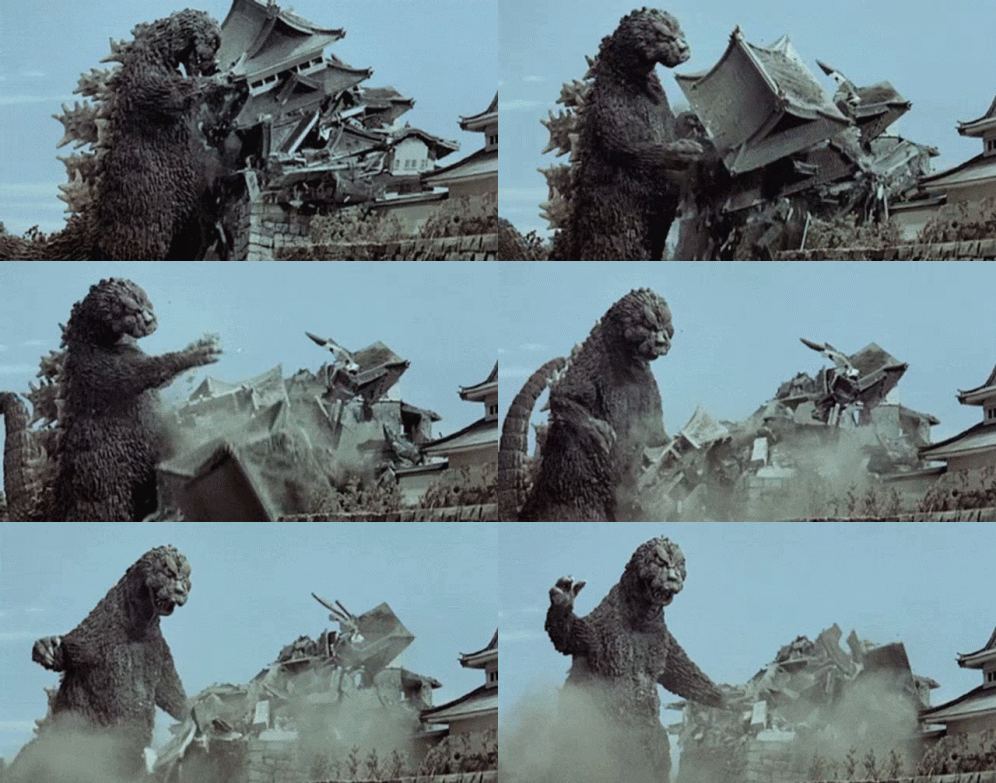
Beyond these aspects you have aliens, mutants, spies, robots, GIANT robots, space ships, super soldiers, sea dwelling people and telepathic miniature twin fairy priestesses who communicate with gargantuan moths. Pretty much anything you can think of is in one Godzilla film or another.
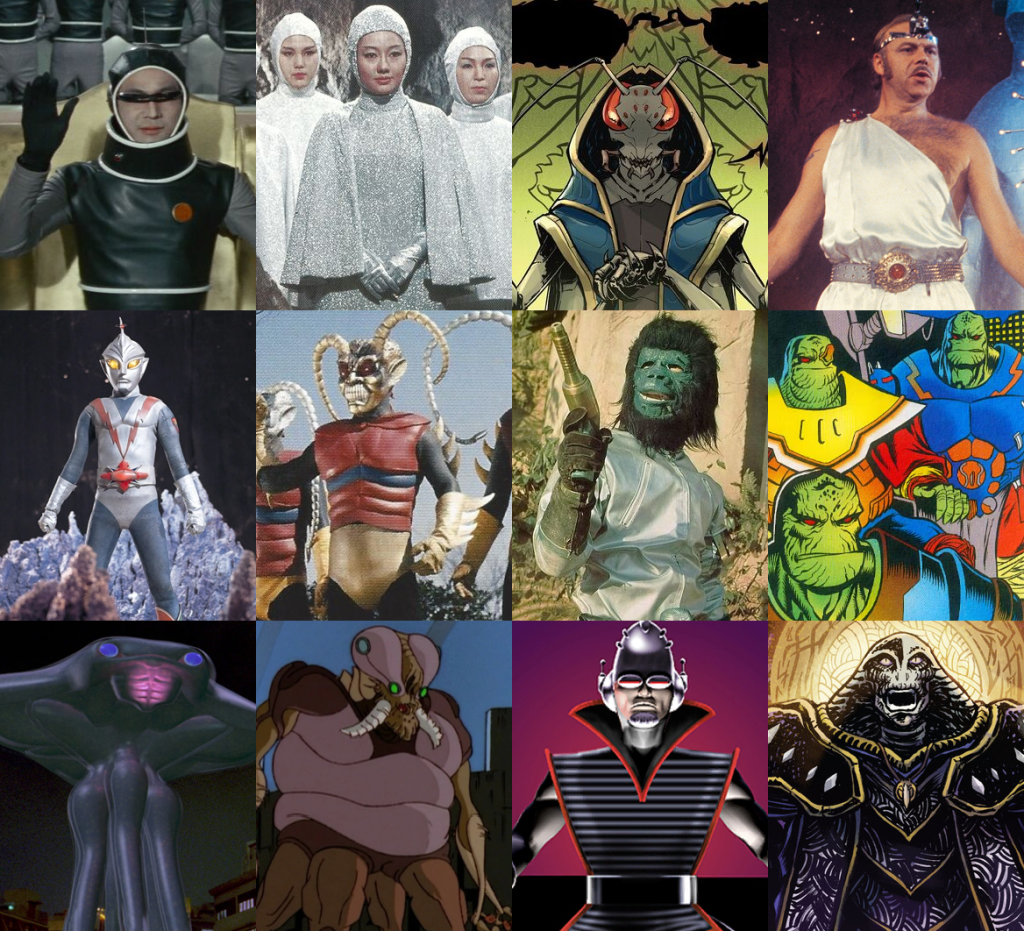
And yet despite this *ahem* variety, people were generally not happy to see the Godzilla anime offer something VERY different from the tropes we’ve seen for over half a century.
It was very focused on the human (or humanoid) drama, none of the monsters were what people would expect and the moral of the story was arguably against something the movie itself was saying is completely beyond our control.
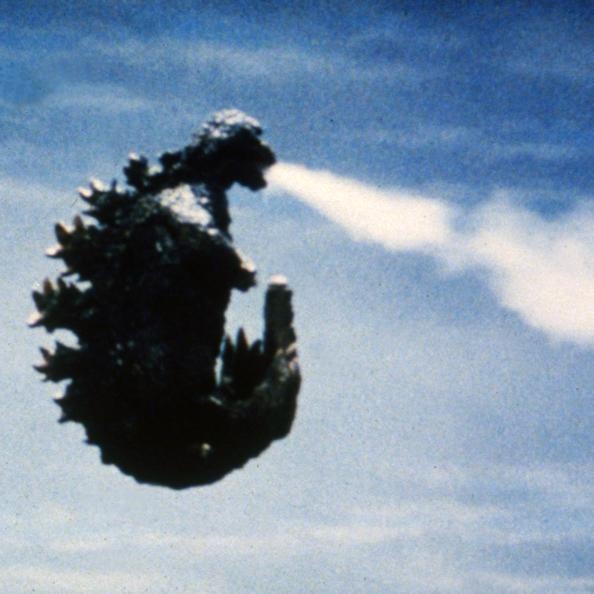
And you know what? I liked it fine! Better than fine actually! I thought it was really a fascinating story. I think its only mistake was associating itself with Godzilla. Had it any other name and central monster, I imagine it would have not invited the criticism of Godzilla fans.
The plot is so unique! I can’t wait to summarize it here for you so here I go!
Seeing no end or favorable conclusion to the incessant battle with Godzilla, the remaining people of Earth (consisting of a large populace of humans and a decent minority of humanoid alien species (the Exif and the Bilusaludo), decide to leave Earth via a massive ship. The plan was to travel to a habitable planet 11.9 light years away but upon arrival after 20 years of space travel, they found the environmental conditions had shifted at their destination making it uninhabitable. Sadly, they decide their only recourse is to go back to Earth, another 20 years of travel.
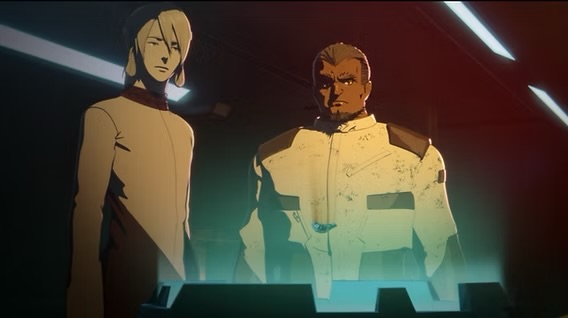
All this time, naturally the elderly are passing, babies are being born, new generations of humans are growing up and taking up roles of leadership. When this group returns to Earth only a small fraction remain who originally left in the first place. Unfortunately they find that because of time dilation and their perspective while in hyperspace, what was for them only a total of 40 years travel, 20,000 years had passed in real time on Earth and the face of the planet was now VERY different.
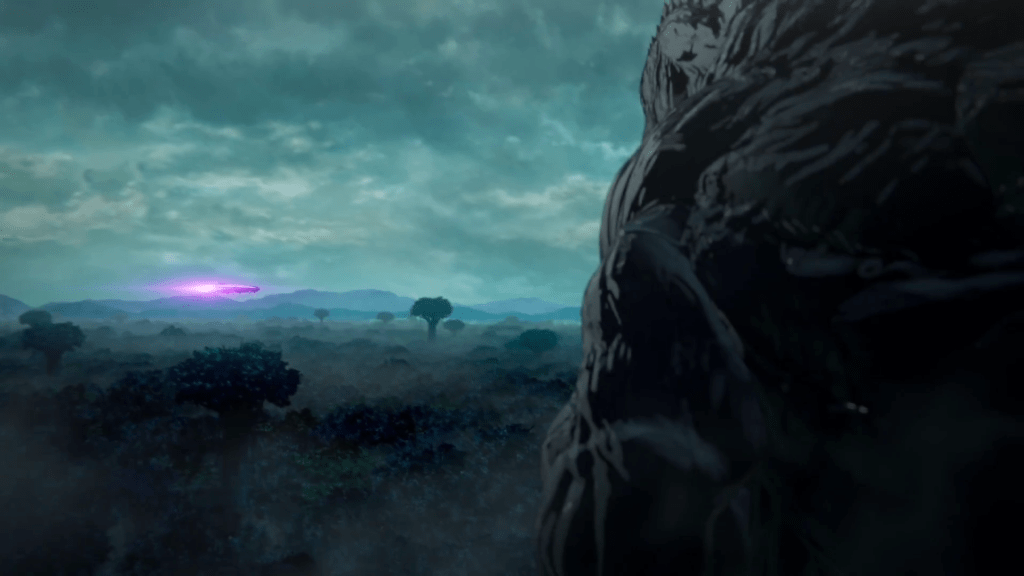
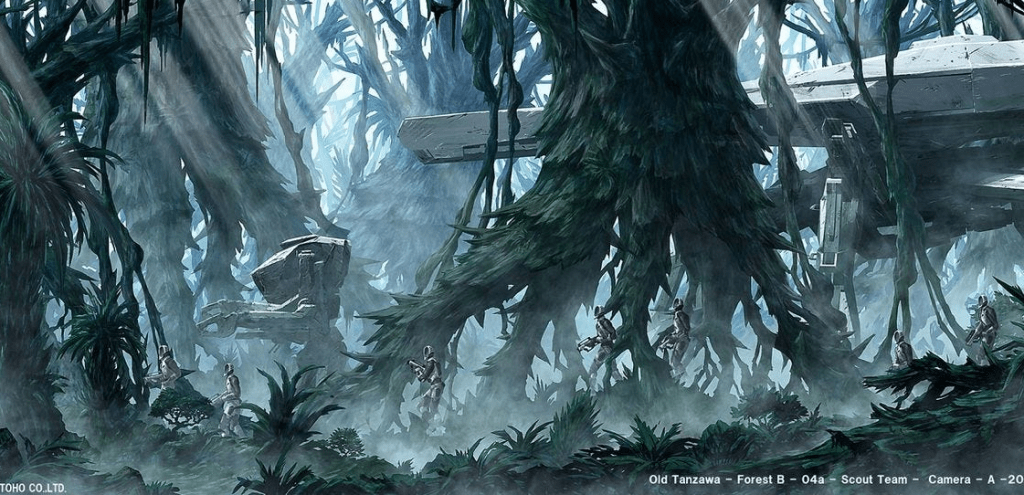
Godzilla remained, now an ancient and unfathomable blight on the horizon, or more accurately, a figurehead of the planet itself. Earth is simply his now. So massive, his movement is barely noticeable. Had there been any city remaining on the face of the Earth, this mobile mountain of a monster would not merely tower over the tallest skyscraper, he would dwarf the entire city to the point of infinitesimal.
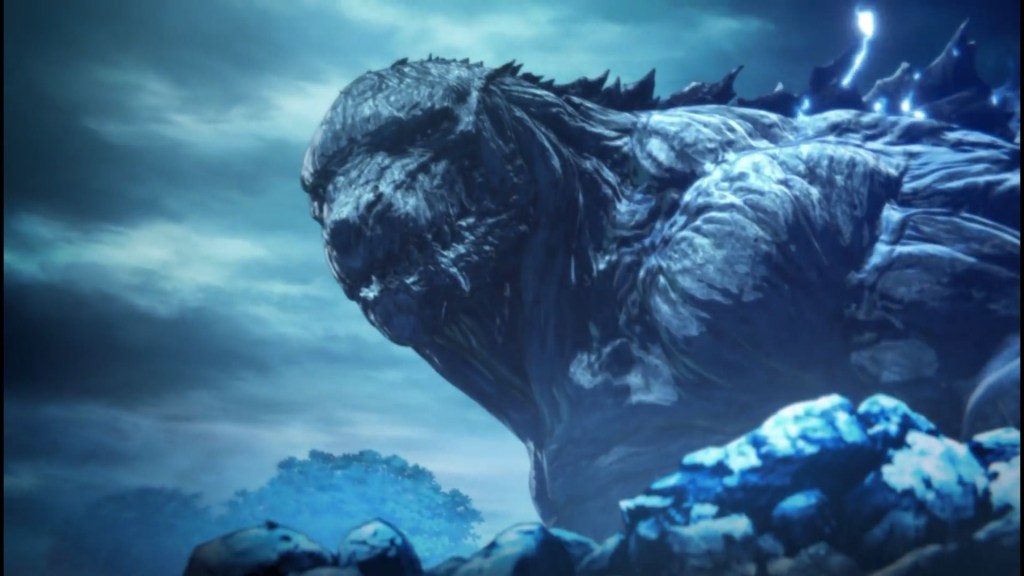
After so long, every life form on the planet had either gone extinct or evolved to coexist with the omnipresent and omnipotent force of Godzilla, resulting in a hostile ecosystem almost as indestructible as the beast himself; an ecosystem from which the humans had regrettably removed themselves, refrained from evolving with, and now vainly hoped to rejoin 20,000 years too late. Could they even call the place home at this point?
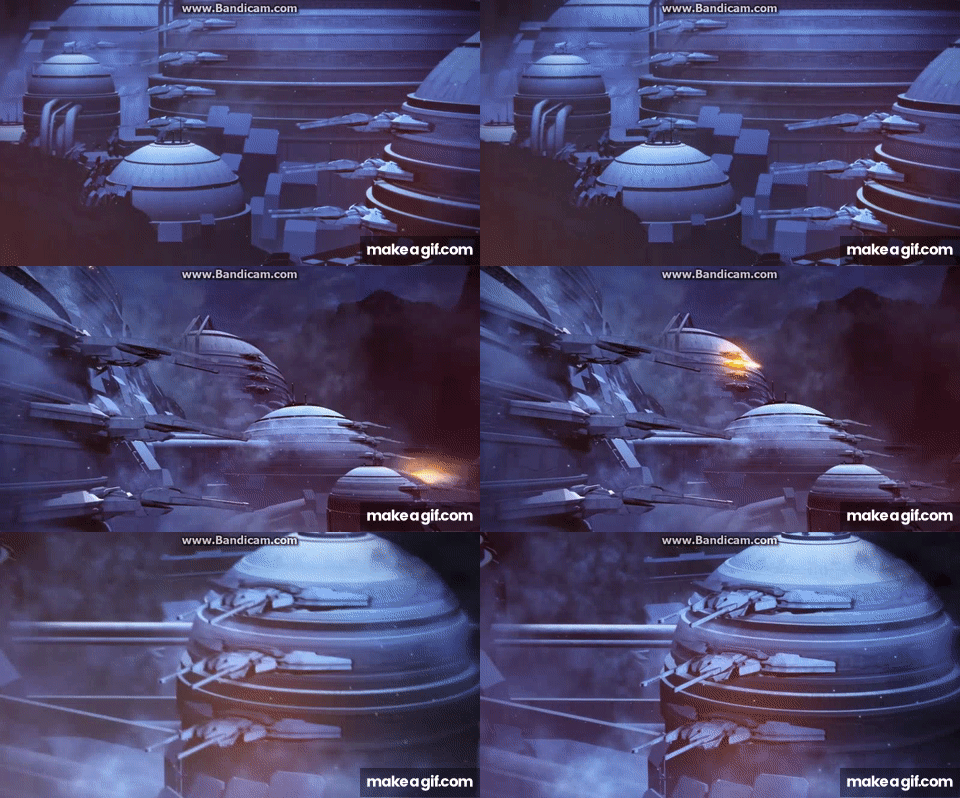
And yet other factors from the past war with Godzilla had also endured in their absence. It’s discovered the technology brought to Earth by the Bilusaludo 20 millenia prior, which once culminated into the tool known as Mecha Godzilla, had reformed into what could essentially be called a city. This “city” consciously held back the constantly encroaching hostile ecosystem and seemed untouchable to the monsters, even Godzilla.
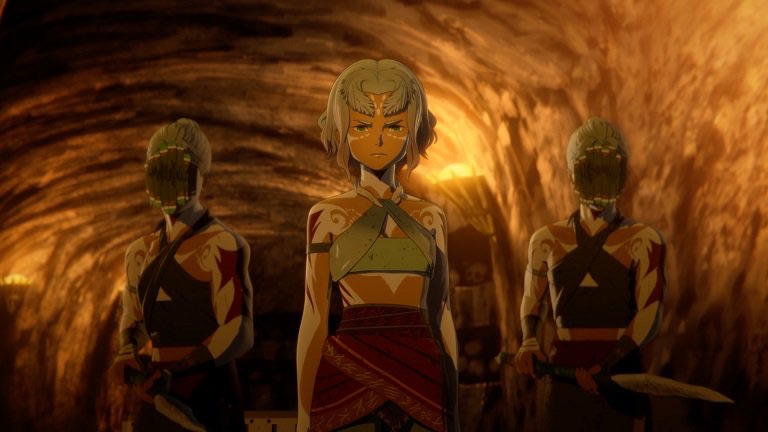
Much to the surprise of everyone, the disassociated people of Earth would also encounter new humanoid inhabitants on the planet. The Houtua, a strange tribe of seemingly primitive people, amazingly lived peacefully in a small community amongst the treacherous landscape. With a prevalence of twins born among them, these slight people with feathery antennae just above their eyes, revered the image of a large winged insect. Mothra’s people did not bother Godzilla and Godzilla did not seem to bother them.
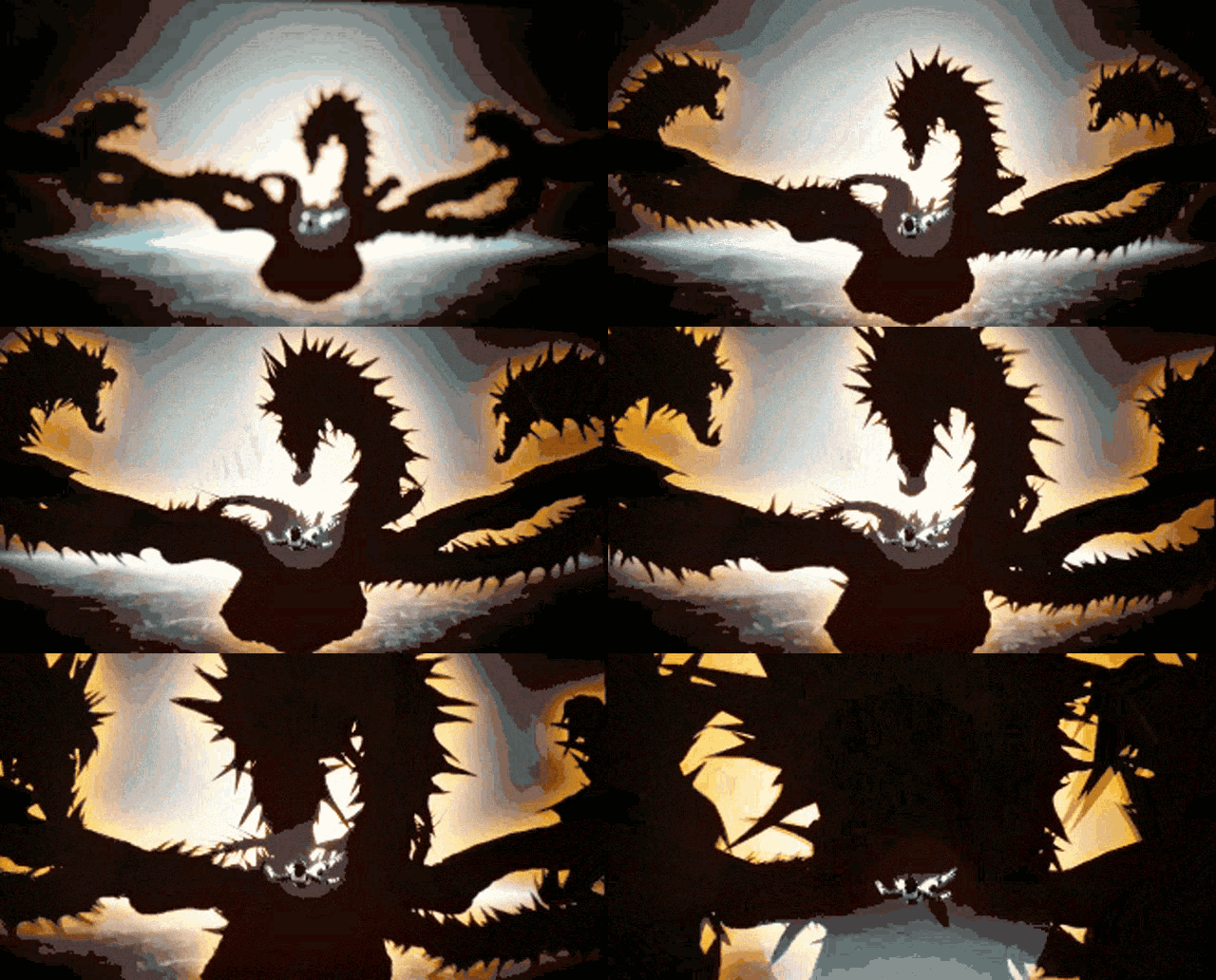
This is the stage on which this story takes place. The previous humans of Earth, along with the Bilusaludo, now seek to reclaim by force the planet they once called home. A plan is hatched to destroy the elder Godzilla. However, the Exif, the other alien race of which only two representatives remain, have been slowly and methodically influencing the last of the human population with a poisonous mindset, a nihilistic view that serves the purpose of their omnicidal extra-dimensional god: King Ghidorah.
Now, I ask you, is that not the coolest crap you’ve ever read!?!
So what were the complaints from Godzilla fans? Godzilla was so big he barely moved. There was nothing for him to destroy. The promise of Mecha Godzilla petered out into literally being just a city. We don’t ever get to see Mecha Godzilla emerge. It was a tease. We don’t ever actually see Mothra. Mothra is just a bunch of people now. And Ghidorah? Ghidorah was just weird. He wasn’t a guy in a rubber suite at all!
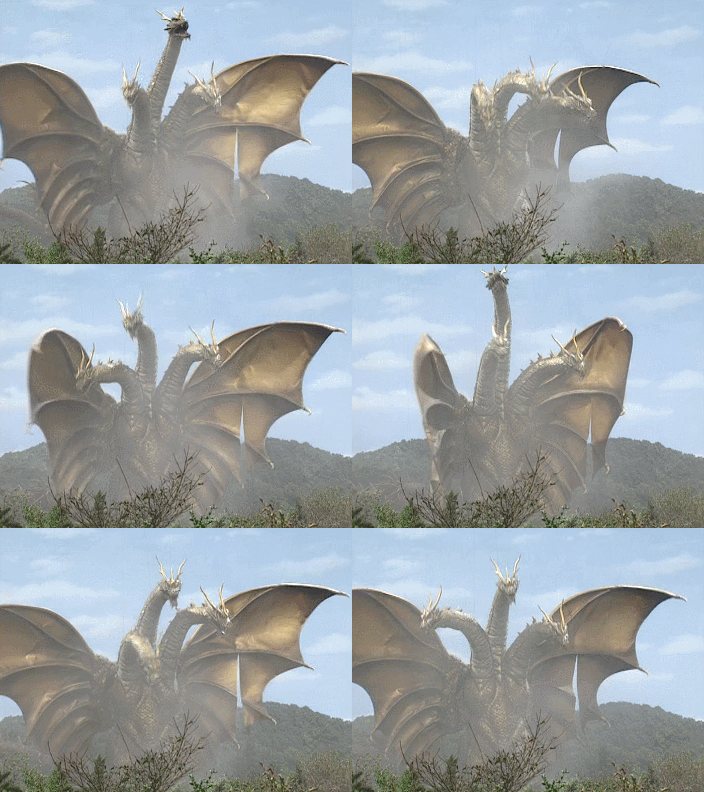
I don’t mean to be down on the fans. I find Godzilla films fun and I agree, there’s a certain criteria to be met to really appease everyone who enjoys such films. In that vein, it probably was a mistake to do a Godzilla film in this way. The filmmakers sought to make this unlike any Godzilla film to date and I’d say they achieved that goal undeniably. They achieved it so well, it has ceased to be a Godzilla film. But looking past this point, I found it to be a REALLY good trilogy.
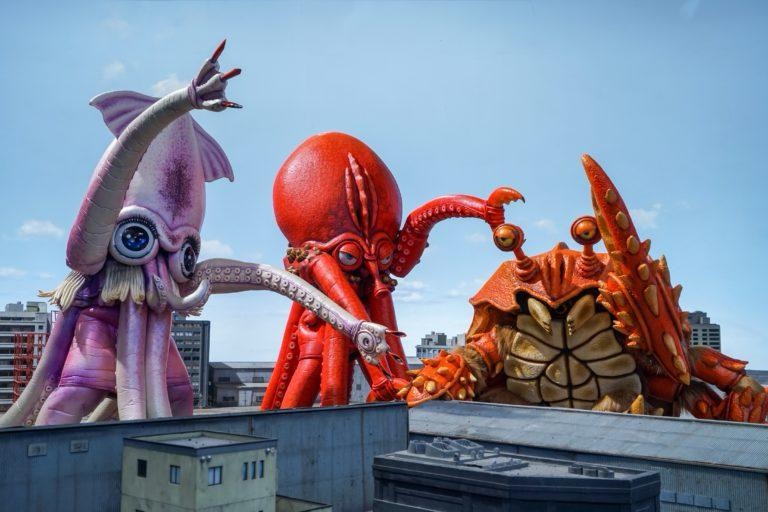
That pretty much wraps up my say on the matter. I will point out, so I don’t get attacked for exposing my ignorance on the internet: I am aware the Bilusaludo are not originally credited with bringing Mecha Godzilla technology to Earth in previous Godzilla canon but it’s hinted at in this trilogy that they were responsible.
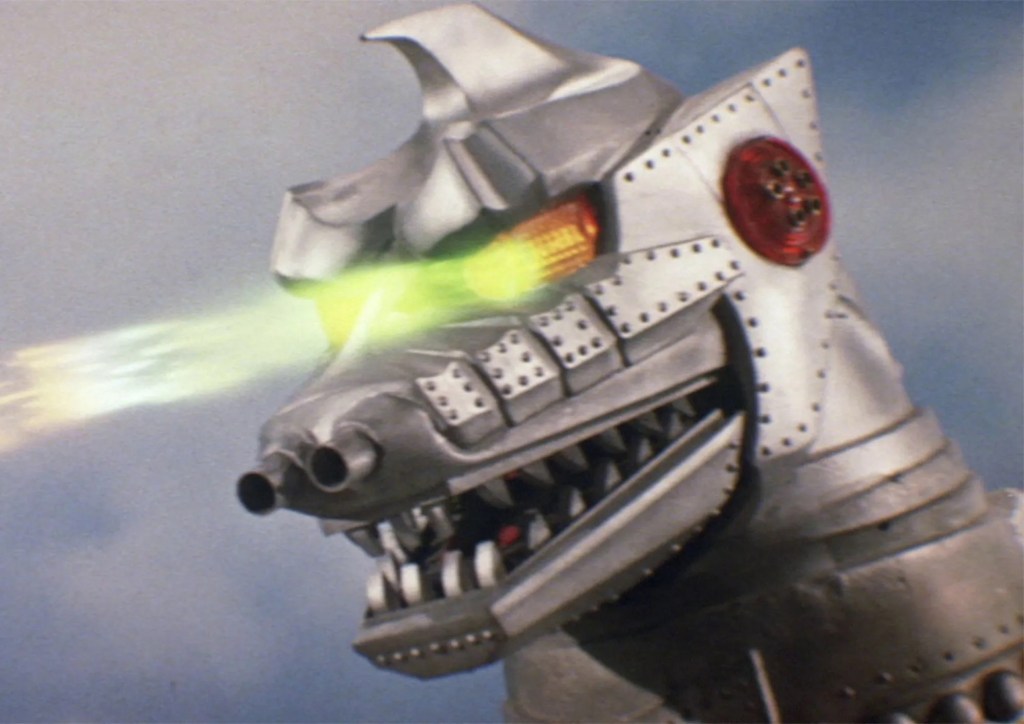
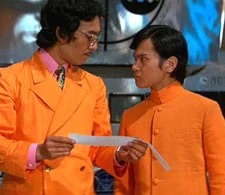
As the Exif are clearly meant to be descendants of the Xilians from Planet X, it’s been noted in official capacity that the Bilusaludo are heavily based on (and arguably descendants of) the Simians (now more often referred to as the “Aliens of Black Hole Planet 3”, probably to disassociate from any ape-like insinuations) who were originally responsible for bringing Mecha Godzilla tech to Earth.

Incidentally, the Bilusaludo home planet was sucked into a black hole. It’s pretty obvious who they are meant to be in the canon of all things Godzilla. Nevertheless, I had to dig to find anything that admitted to it on the interwebs.
For a while I thought they might be the giant cockroach people, the Nebulans from Godzilla vs. Gigan (1972). Those guys were silly.
[Slight spoiler ahead if you’re clever.]
The overlying moral or warning in this trilogy was more of surrendering to the idea that we as a species will not change and will craft our destruction with whatever efforts we put forth to survive. This puts the nihilistic philosophy of the Exif into strange perspective when the main character starts to realize his influence on the peaceful Houtua.
One could argue this idea is exemplified perfectly by the fact that Godzilla will never be destroyed.
It’s a fascinating concept. And kind of sad.
I highly recommend these films.
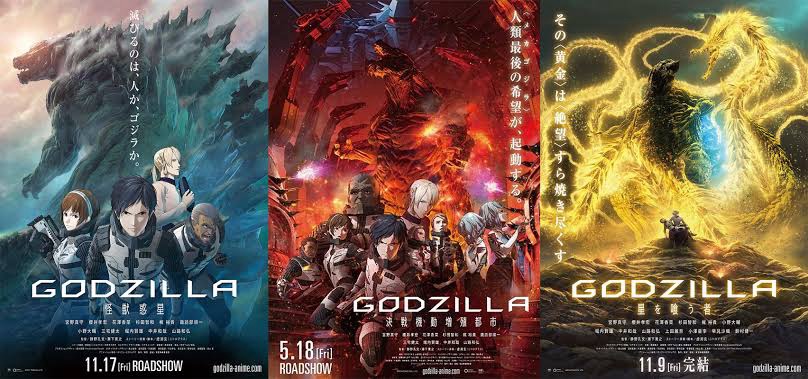
Posters!


Leave a comment