
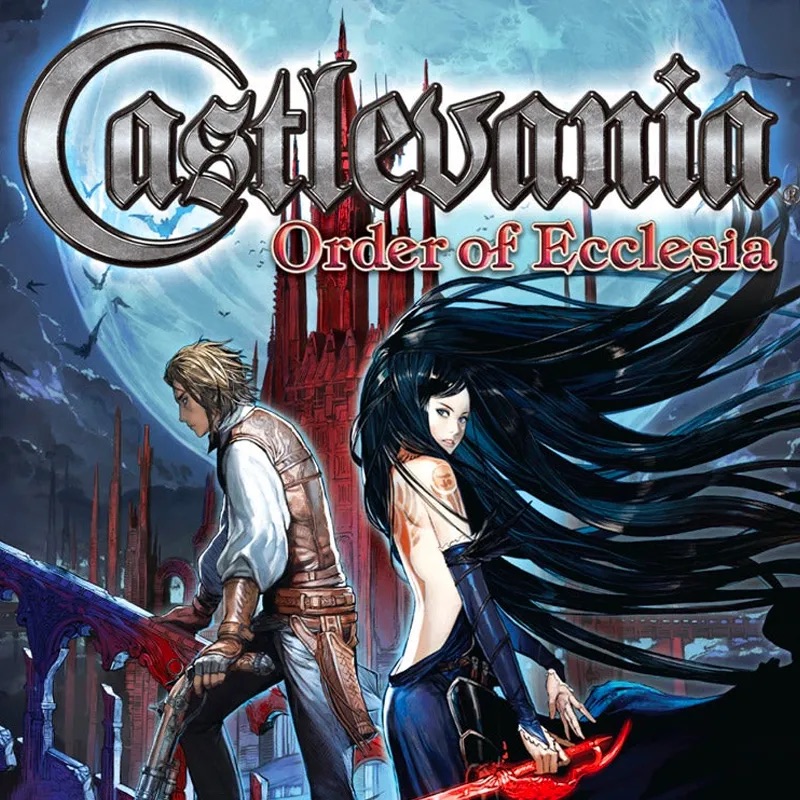
A Video Game Non-review by Professor Popinjay
(2008)
Starting as a side-scrolling platformer for the Nintendo Entertainment System, Konami’s gothic Dracula-centric Castlevania series has undergone a unique evolution throughout the years, spanning genres, artistic style, and even some gimmicky gameplay mechanics. Its story has gone from quaint to compelling to complex and back again, showing up in a myriad of media.
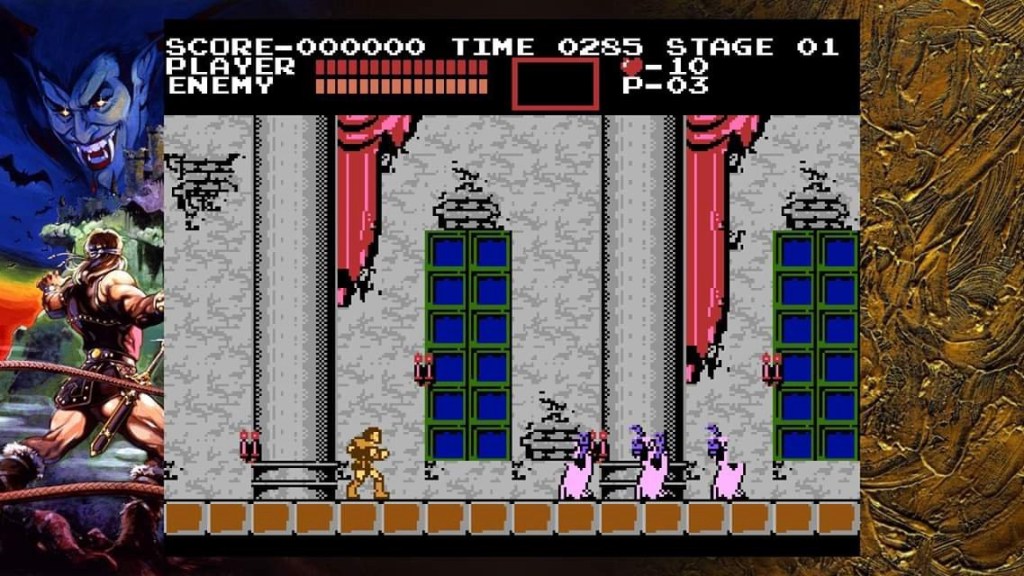
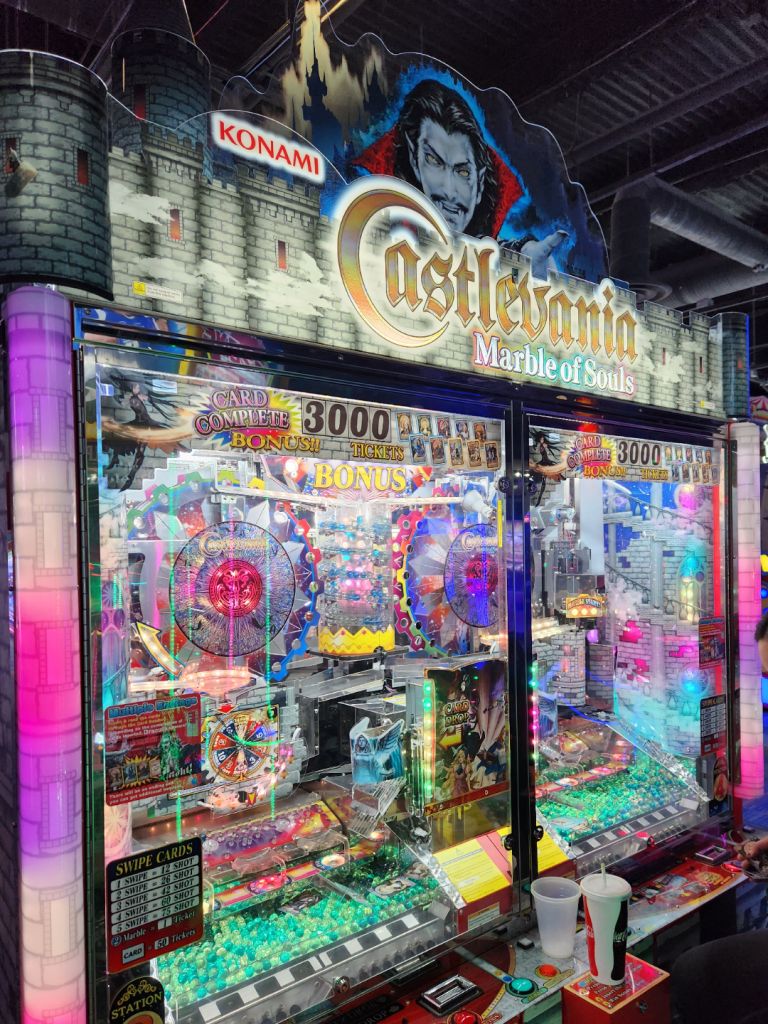
You can play some form of Castlevania on just about any device these days, or watch the Netflix anime, or play a pay-to-win mobile app, or try your luck with the Castlevania coin-pusher machines. Money grubbing CEOs at Konami may have diluted the Castlevania franchise into a shameful money-printer compared to its past days of glory, even inspiring renowned programmer, Koji Igarashi, to leave Konami and make his own love letters to what he believed Castlevania was supposed to be. Just up to that point though, these are some of my favorite games… eventually.
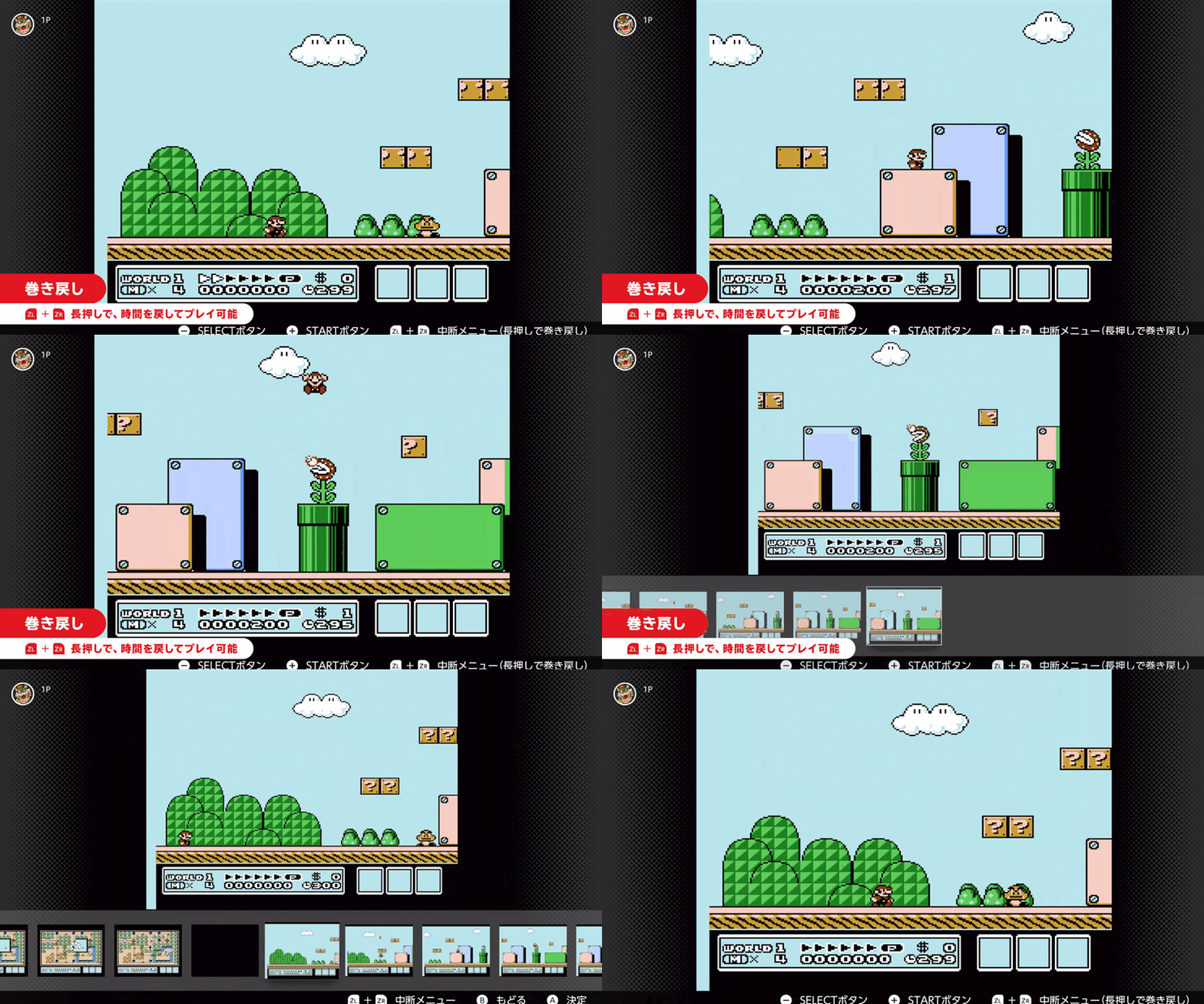
The originals were too difficult for me, young uncoordinated pup that I was. The term “NES hard” is real. It wasn’t until later in life and the advent of save states and “rewinding” that I was ever able to make any headway in these. Save states and rewinding enables one to try something in a game over and over again without having to traverse an entire level every time a player fails. It prevents running out of lives and/or “continues” the lack of which would force a player to start from the very beginning of a game. Needless to say, the addition of save states and the rewinding ability, often added to modern re-releases of older games, makes things far less frustrating. My hat is certainly off to anyone who mastered these games the hard way. Alas, I am not one.
I was also much older when I finally gave Castlevania IV on the Super Nintendo a serious try. The employment of the Mode 7 functionality was certainly impressive with its turning towers, rotating rooms, and huge swinging chandeliers.
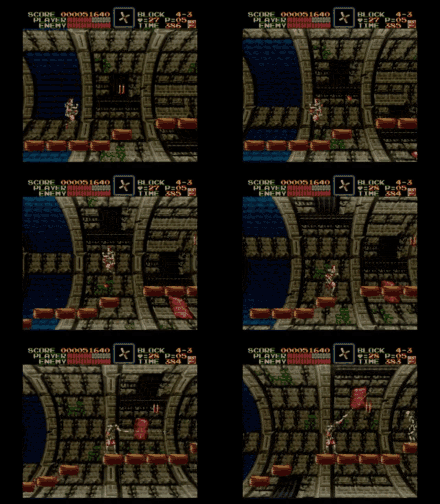
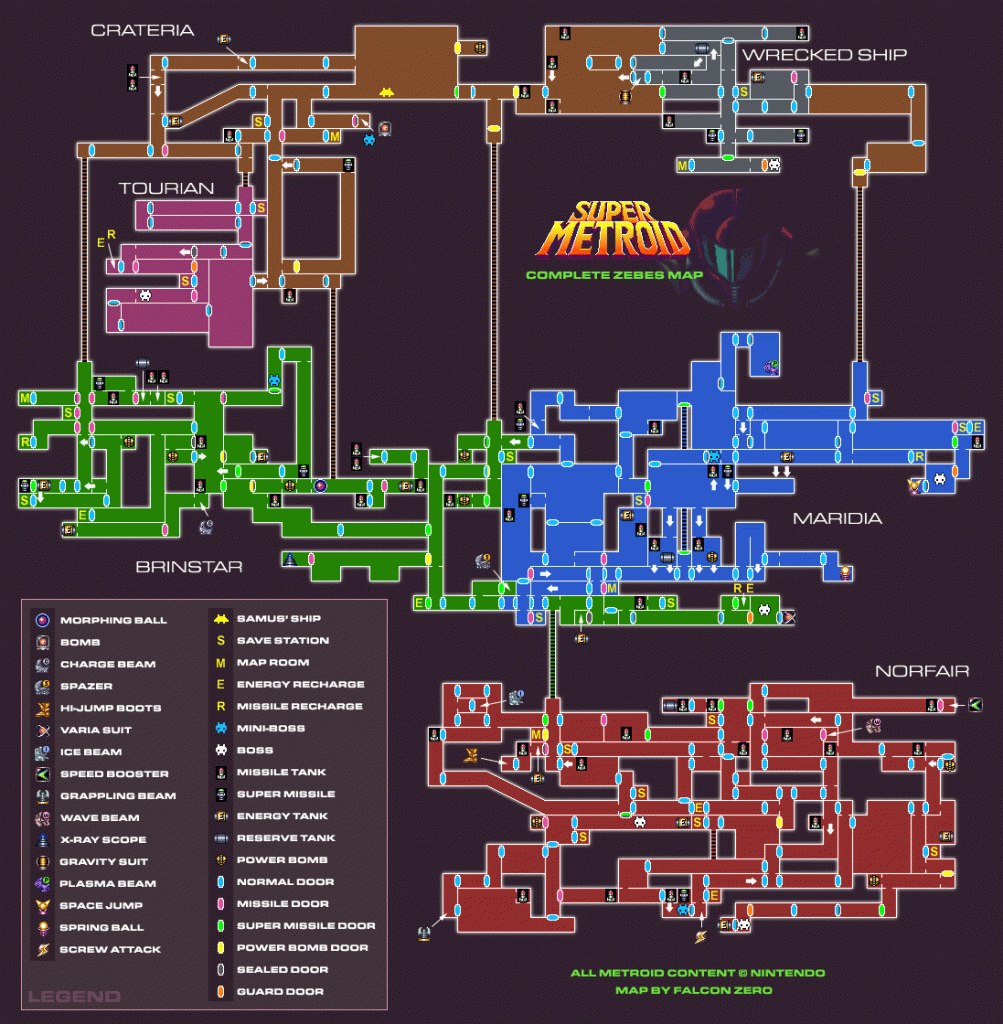
However, back in 1991, I was bored with linear games where all I had to do was get little man from one side of the screen to the other. Non-linear games with huge maps that I could infiltrate at my leisure and interest, like The Legend of Zelda or Super Metroid… these were my jam.
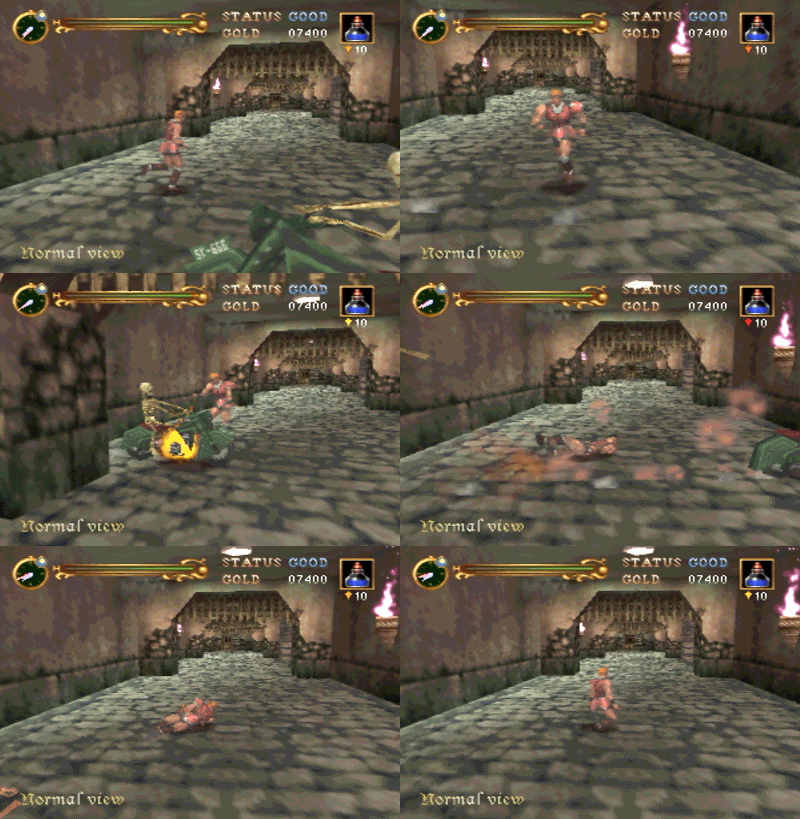
In 1999 I gave Castlevania on the Nintendo 64 a try. I was excited by the notion of a sprawling explorable castle and a game that didn’t hold your hand and explicitly tell you where to go. Unfortunately, as with many games at the time which were being translated into the unfamiliar waters of 3–D gaming, the camera and controls were janky and very frustrating to use. I quickly gave up and have not since returned. A janky camera I cannot abide.
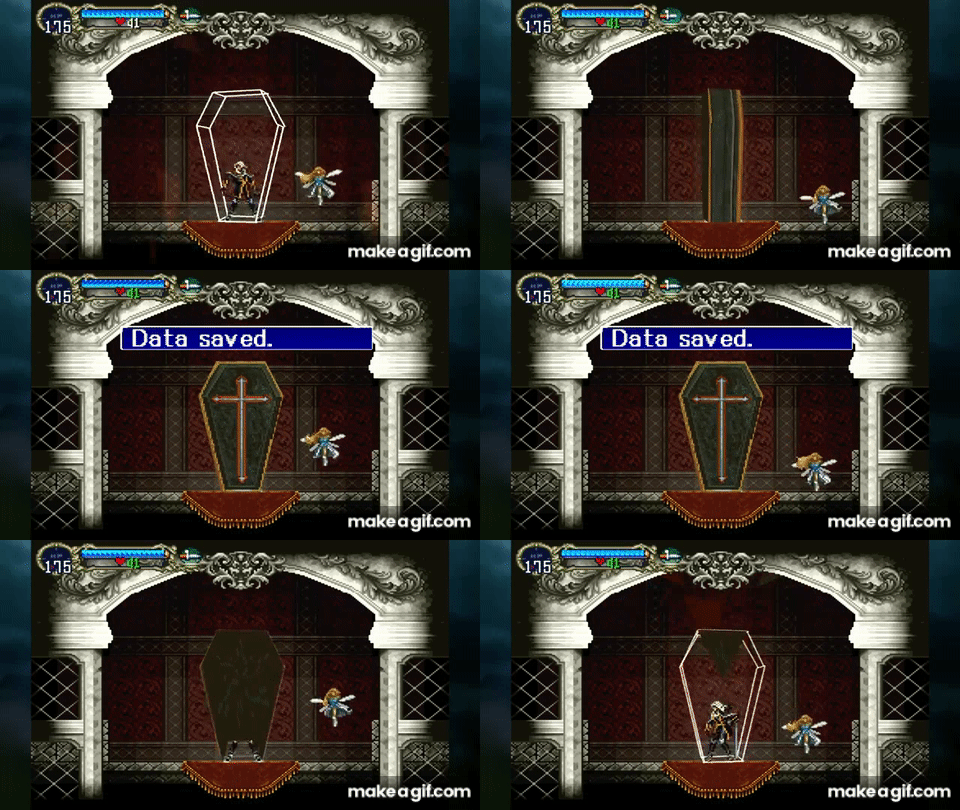
Step back a bit to 1997; a friend got a hold of a copy of Castlevania: Symphony of the Night for his PlayStation. It was amazing! Despite being on an advanced system, the game remained in its usual side-scrolling format. However, gone was the linear “level-by-level” format, with its gaining and losing of “lives” and “continues”. In its place was a sprawling castle in which you could immediately go almost anywhere and, if not, you were left to figure out why which translated to fun for me. Peppered fairly conveniently throughout the map were save points from whence you could recommence indefinitely. It was, dare I say it, just like Super Metroid! It was the dawn of the Metroidvania, a term that would eventually become synonymous with an entire genre of video games, even those that were neither Metroid nor Castlevania but still adhered to this enjoyable format of huge maps and little to no coerced directions.
Castlevania added another useful element. In Metroid the difficulty could be lessened to some extent by finding expansions for extra and stronger ammunition for your weapons. Regardless, there was still a high level of skill required when trying to vanquish some of the more powerful bosses. Castlevania: Symphony of the Night had its variety of weapons and abilities you could employ but the real edge was an RPG style experience system. Every enemy dispatched would add experience points to your attribute stats. The more enemies you dispatched the stronger you became. Come upon a boss that wipes the floor with you? Just go level up for a while and come back stronger.

This system made these games even more accessible to me. I did not have the patience to master video games. I hated the frustration caused by failing over and over again. But grinding away for hours, leveling-up a character little by little until I was undefeatable? That was the kind of mind-numbing monotony I craved from video games. Please, disable my mind from creating and filling up with ideas for just a little while. Ah, sweet release!

But I wouldn’t really play much of Symphony of the Night in 1997. It wasn’t my game. I never owned an original PlayStation. By the time I finally bought a PlayStation 2, that game was so sought after it couldn’t be found and if it could, it was expensive! Even today the original disc sells on eBay anywhere from $80.00-$180.00. Thankfully, it would be released on other platforms later.

No, the first real Metroidvania game (that wasn’t ACTUALLY a Metroid game) I would get my hands on would be Castlevania: Circle of the Moon for the Gameboy Advance sometime after 2001. I loved the Gameboy Advance and I played the crap out of Circle of the Moon. For all I knew at the time, it was as close as I would come to playing a masterpiece like Symphony of the Night.
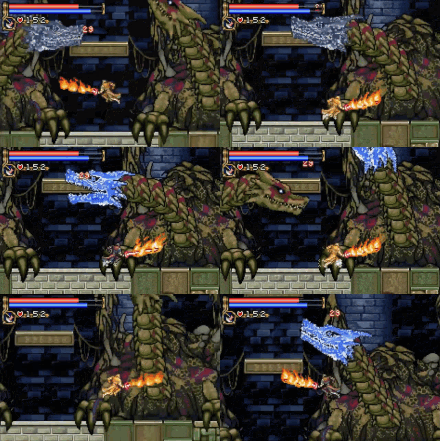
(Circle of the Moon gameplay pictured)
My fervor for these games now at an unsinkable apex, I began consuming them insatiably. [God, that’s a beautiful sentence!] The “New Game +” feature enabled a player to start their game from the beginning with all their stats and items obtained in previous playthroughs still intact. You could enjoy the game again and again without starting over as a weakling, finding new paths and unlocking new playable characters and aspects of the game as you went along. Playing through was fun but playing through again was even more rewarding!

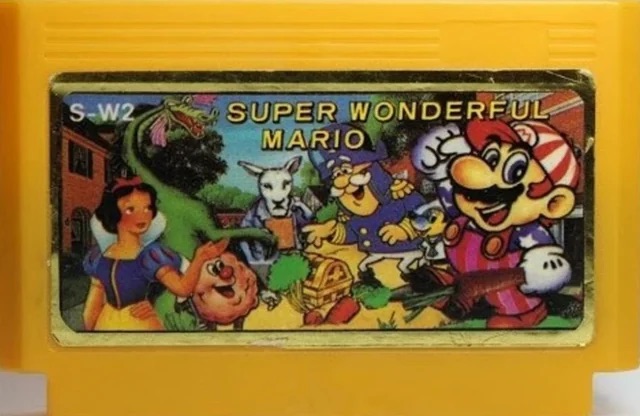
After Circle of the Moon, I played Castlevania: Aria of Sorrow so much the save files quit saving and my girlfriend at the time bought me a new copy for my birthday. Although, I think she might have accidentally obtained a pirated copy. The label on the cartridge was not the right aspect ratio, a telltale sign. It worked fine though! I don’t advocate piracy, but we were both unaware at the time.
From here I played through Dawn of Sorrow, Harmony of Dissonance, Portrait of Ruin, Symphony of the Night (FINALLY), Lords of Shadow, and Lament of Innocence. Some were fair, most were fantastic!
It’s not a comprehensive list, just whatever I was able to get my hands on with limited funds and eBay not exactly a viable option for me yet.
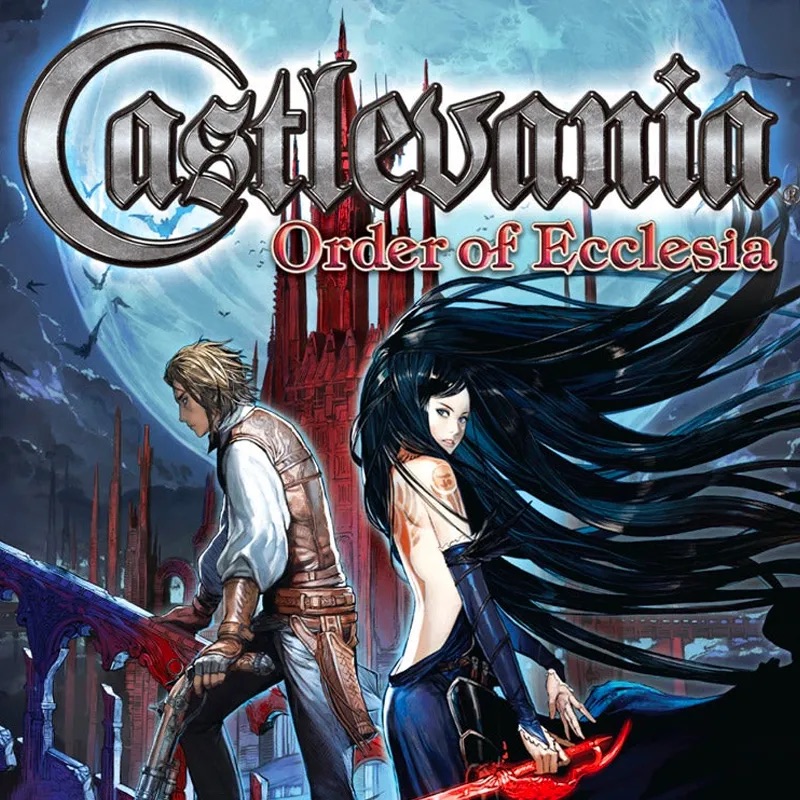
Finally, I came to it. I learned of a title for the Nintendo DS called Castlevania: Order of Ecclesia.
Most copies were fairly expensive when I discovered it. But I found one being sold at a Goodwill at an affordable price. I got it home, popped it in and was quickly very disappointed.

Order of Ecclesia had all the usual trappings of a great Metroidvania. It also had a combat system that drove me nuts. Instead of weapons in the conventional sense, you were required to employ glyphs. For all intents and purposes, “glyphs” was just another name for weapons. In most Castlevania games obtaining a new weapon meant finding it in a chest somewhere or an enemy might drop it after you defeated them. You just walk over and pick it up. In Order of Ecclesia, to obtain a glyph, which an enemy might leave as a glowing symbol floating in the air, you had to push a button to absorb it. If any other enemies were still around throwing things at you, being hit by something would interrupt the absorbing process. Take too long dispatching other enemies, and the glyph would disappear.
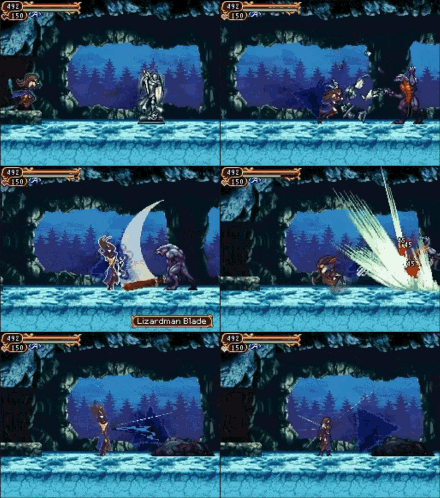
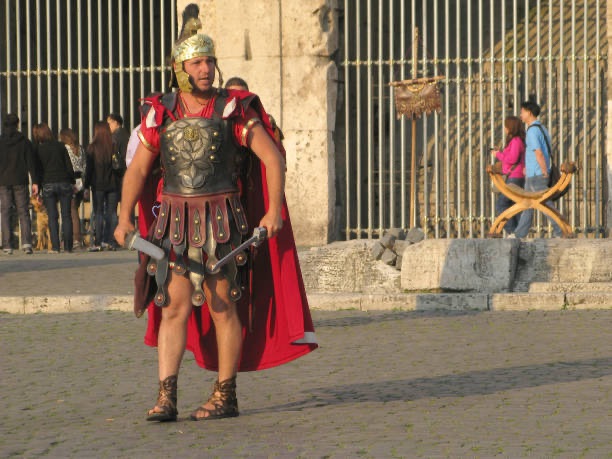
Frustrating as it could be, this part of the system was easy enough to get the hang of. I even got the hang of the complicated Latin names of all these glyphs. My knowledge of the Latin language tripled since playing this game. I can now rattle off a whole series of Latin weapons and their varying degrees of effectiveness, whether Volitilis or Melio. I suppose it’s better than memorizing the legions of Pokémon names. Not MUCH better though. If a Roman Centurion ever comes by my house and needs me to sort his weapons alphabetically in Latin, I’ll be ready!
No, the REALLY frustrating part of the fighting system is the constant requirement to switch from one set of glyph weapons to another on the fly. This is necessary because frequently on a single screen, you will encounter enemies with conflicting strengths and or weaknesses. A particular sword glyph might be useful against the bats for instance, but completely useless against the psychotic butcher in the same room! So you switch to the fireball glyph which works great on the butcher, but right behind HIM is a stone golem who is impervious to fire. So you have to switch again. The game tries to make this switching convenient, but it translates into fiddly controls which I hate. I hate it primarily because while I’m fiddling with controls, trying to figure out what glyph works against whom, I’m usually getting my butt whooped. So I put this game away.

And it ate at me for several years. I knew, with practice, one can become proficient with fiddly controls. I knew the more I practiced and played the stronger my character would become and stronger weapons I would obtain.
Plus, I did some research. I wanted to see if this game was at all popular or if everyone had the same complaints I did. I stumbled upon one guy on YouTube, who somehow made it to the end of the game using the two original weapons he started with. I was amazed at that level of skill, but he was complaining of how difficult it was.
I thought, “Well, of course you’re finding it difficult! You’re not properly using the weapon system.”
The YouTuber was claiming the little knife and pathetic spear glyphs were all you get for the whole game. Never even once did he try to absorb any other glyphs beyond what the initial tutorial required. He went on to say he knows there’s ways to get other weapons but ain’t nobody got time for that. I could not wrap my head around how an avid player of these games couldn’t be bothered to actually figure out how it’s played.

Then I realized I was embodying that same description. I loved Castlevania. Was I going to let some fiddly controls defeat me? I paid good money for this game! So what did I finally do? I bought the Dominus Collection on the Nintendo Switch which includes Order of Ecclesia and permits save states and rewinding and I got to work! I told you, I have zero patience to “get good”.

It was still hard at first. I had to rewind ALOT! I had to gain experience points for hours upon hours just to be even remotely formidable in the initial tasks. Even the in-game timer gave up, maxed out at 99 hours.
Gradually, however, I quit having to rewind so much. My glyphs and I became so strong, I didn’t have to fiddle with controls anymore. One weapon, Nitesco it is called, aptly meaning “I begin to shine” or “to grow bright”, seems to supersede most enemies’ immunities, thus enabling me to dispatch them in the blink of an eye without ever switching glyphs from one enemy to another. Add to this an ability glyph called Rapidus Fio (I am made fast), and you just about LITERALLY fly through the game, by-passing screens in milliseconds. In this way, the game is beatable in about 35-40 minutes.
Several different modes of play are unlocked as you proceed through the game multiple times. There’s the mode where you can play as the character Albus, who has only a select few abilities and attacks. There’s a boss rush mode where you fight several bosses consecutively, yielding powerful item rewards you can use back in the normal story mode. Then there’s various hard modes. One hard mode disables you from growing any stronger than level 1 in experience points; a very difficult mode indeed. A less difficult hard mode permits you to advance to a level 50 strength but no further. Finally, while the normal mode maxes out at level 99 strength, there is a mode that permits you to advance your strength all the way to level 255 which is insane overkill.

Even having conquered all other modes, grinding my experience points up to level 255 still seemed daunting. I also noticed something else. I would get a medal whenever I defeated a boss without getting hit. As I could now defeat most bosses in a matter of seconds without getting hit, I figured I’d set to the task of maxing out my carrying capacity for each of these medals; a total of nine medals per boss, one medal each per playthrough.

Something in me irrationally concluded: Since it took so dang long for me to finally start enjoying this game, I know I’m never going to play it again from scratch for the rest of my life, so I will max out literally everything I can max out and then never touch this game again. Order of Ecclesia will not have defeated me with its fiddly controls. I will have defeated Order of Ecclesia once and for all… with the use of save states and rewinding. I may be obsessive compulsive but I’m not a masochist.

The list of obtainable items in many Castlevania games is vast and you can usually obtain up to nine of each item. Some of these items are extremely rare, requiring you to enter a room, defeat an enemy and hope they drop the item at .01% probability. Seeing that the enemy dropped nothing, I exit the room and repeat. I would count upwards of 300 tries before a particular item would drop and I had to collect nine of these things? Oi!
I’ve heard of people maxing out Circle of the Moon and in that installment you could obtain not merely nine but 99 of each item! That’s ridiculous! But I suppose I’m one to talk.
Finally, after countless stupid hours wasted playing this stupid game, often letting it lull me to sleep as the perpetual motion and muscle memory took over, sometimes waking up to an inescapable “game over” screen having sat there long past the device’s memory cache to effectively utilize the rewind function; finally, after one last playthrough, long after reaching the 255 experience level, every item collected to its maximum limit, every medal collected 9 times each, every possible attribute stat raised to its highest limit, even the game’s currency (gold) collected up to 9,999,999… I was done.
I did one last playthrough to show one of my kids I could finish it in about 35 minutes. Then I set the controller down and said “Never again”.

Circle of the Moon, Aria of Sarrow, Dawn of Sorrow. I played through these a few times each, fairly casually, because I thoroughly enjoyed them from start to finish. But Order of Ecclesia… I hated it. So I destroyed it. You might say it was just a game, man! To me it was an insult, and I saw fit to refute it with extreme prejudice. Now I have written my thoughts on the matter, I will never think of it again or so help me! Good riddance.
Fun game though, eventually.


Leave a comment